

Bedtime Story Ideas for Toddlers: Short, Calm, and Repetitive
Short, repetitive, and often personalised bedtime stories help toddlers settle more than long, exciting tales ever could.
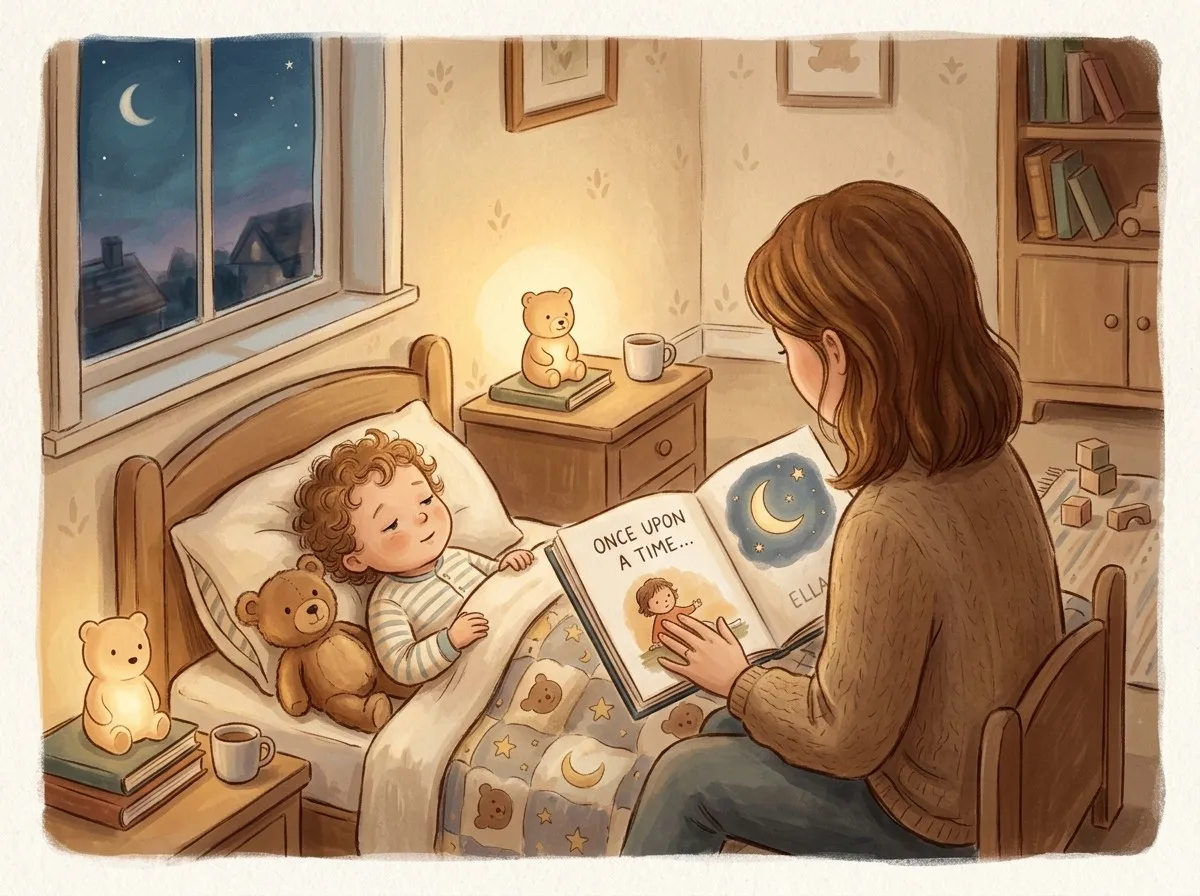
You need bedtime story ideas for toddlers that end the day calmly, not a long story they wriggle out of by page four. Toddlers listen in short bursts, so the best bedtime stories are short, simple and repetitive. That repetition does quiet work.
Why the shortest stories are the ones toddlers love most
A two or three year old may sit happily through about eight simple pages. Stretch that to twenty pages and you are often reading to the duvet. Short books fit the way toddlers listen: little bursts, eyes darting from picture to face to pillow.
Repetition does not bore them. It reassures them. When a familiar phrase returns, a toddler knows what is coming. That predictability makes bedtime feel safe. Many parents find this is what helps a child settle, because nothing about the story feels demanding.
That is why gentle titles such as Goodnight, Little Moon or Milo Finds His Mittens work so well for this age. They stay close to home, keep the action small, and return to a comforting idea before the final page. If you want to browse the bedtime story ideas, the same rule applies. You do not need an epic. A simple personalised story with the child’s name inside it is often the one they ask for again and again.
The bedtime stories that actually help a child settle
Not all gentle stories are gentle in the way a tired toddler needs. A story set in a familiar kitchen or a quiet bedroom works differently from one that tries to hush a dragon. Calm themes, familiar settings and soft, predictable language invite a child to stop listening with wide eyes and start letting go of the day.
Characters who are themselves winding down do the quiet work for you. When the hero of the story brushes their teeth, finds a beloved toy and whispers goodnight to the moon, your child is not just hearing a tale. They are rehearsing their own routine from a safe, tucked-up distance. There is no conflict to process and no cliffhanger to protest. The story’s job is to be the last gentle thought before sleep.
That is exactly how several CubFable story ideas are built. In Goodnight, Little Moon the child says goodnight to the familiar objects in their room, one by one. The Torch Under the Pillow turns a small bedtime ritual into a moment of quiet courage, and The Lullaby in Your Pocket carries a parent’s hummed song right into the narrative. Because the book is personalised, the child sees their own face and hears their own name moving through the same calm steps they are about to follow. Many parents find that this mirroring is what helps a toddler settle more than any exciting plot ever could. You can browse the bedtime story ideas to find the one that best matches your child’s own winding-down rhythm.
How to weave a story into your already-busy bedtime routine
Even on evenings when the bath ran late and your toddler is half-asleep on the landing, a story can still happen. The trick is to stop treating story time as a performance and start treating it as a quiet, non-negotiable pocket of connection.
A few simple habits help it stick without turning into a battle.
- Anchor story time to something you already do. Read straight after teeth-brushing, or while you sit on the edge of the cot. Removing the daily “shall we read?” choice takes the negotiation off the table.
- Keep it brief. One short tale—or even just the first half of a favourite—is plenty. On ragged nights many parents read the same two pages their child loves and call it done.
- Make the story theirs. A child who hears their own name inside a tale leans in differently. A personalised book such as Goodnight, Little Moon or The Lullaby in Your Pocket mirrors their own bedroom routine and becomes the signal that the day is closing.
- Have a screen backup. CubFable books can be read on a phone or tablet as soon as they are generated. If the printed copy is left at Grandma’s, the story is still ready.
The goal is not a perfect reading. It is a small, predictable moment your toddler can count on. When they know exactly what is coming, they are far less likely to wrestle the wind-down and far more likely to carry that calm into sleep.
What happens when the main character is the child in your arms
A story where your child is the hero does something quiet but powerful at bedtime. It removes the distance between the listener and the tale. There is no character to observe from the outside, no name to remember. The child in your lap is already inside the story, living it alongside you.
With CubFable, that happens before you ever hold the printed book. You pick a toddler-friendly idea such as Goodnight, Little Moon or The Lullaby in Your Pocket, enter your child’s name, and upload a photo so the illustrations carry their likeness through every page. Before a single image is drawn, you see the full text and approve it. That means you know exactly what your child will hear, and you can shape it to feel right for your family.
Once you are happy, the book is illustrated, printed and bound, arriving as a proper hardback you can tuck on the shelf. But you do not have to wait for the post. The finished story is available on screen straight away, which is a small mercy on the night you left the physical copy at Granny’s house.
Many parents find that seeing their own face and name woven into a calm, familiar narrative helps a child feel settled. The story becomes their story. And when a tired toddler recognises themselves tiptoeing through the same bedtime steps they are about to take, the boundary between listening and letting go grows pleasingly thin.
When your toddler wants the same story again (and again)
You have read Goodnight, Little Moon every evening for three weeks. You know it by heart. Your toddler still points at the same page, waiting for the same line, and if you skip so much as a word they will call you out. It can feel like you are stuck in a loop, but something quite useful is happening beneath the surface.
Repetition is how a young child makes sense of the world. The same words in the same order are predictable in a way the rest of their day rarely is. That predictability is deeply comforting, especially at bedtime when the lights are going down and the separation from you is approaching. A familiar story tells them that tonight is like last night. It is safe. Nothing unexpected will jump out.
A personalised book often cements itself as the chosen favourite more quickly than a standard picture book does. When your child hears their own name inside a story such as The Torch Under the Pillow or The Lullaby in Your Pocket, the tale stops being something that happens to a distant character. It becomes their ritual, one they want to revisit again and again because it confirms that they belong in the narrative. Many parents find that this kind of repeated reading is not a sign of boredom but of deep attachment. The book has become a comfort object, as real to the child as a favourite blanket.
Let the repetition happen. Eventually your toddler will be ready for the next story, and you can browse the bedtime story ideas when that moment arrives. For now, reading the same pages night after night is not a rut. It is the sound of a bedtime ritual growing sturdy roots.
Frequently asked questions
Why do toddlers want the same bedtime story every night?
Repetition gives toddlers a sense of predictability and safety. When a child hears the same words and pictures in the same order, they know exactly what is coming. That familiarity is deeply comforting at bedtime, helping them settle and feel secure as the day ends.
What makes a bedtime story truly calming for a toddler?
A calming bedtime story keeps sentences short and the language soft. Familiar settings like a cosy bedroom and gentle routines (finding a toy, saying goodnight) replace conflict and cliffhangers. When the main character mirrors the child’s own bedtime steps, the story becomes a soothing cue for sleep.
How can I fit a story into a busy bedtime routine?
Anchor story time to a fixed moment, such as straight after teeth-brushing. Keep it brief—even a couple of favourite pages is enough. A personalised book can help because a child who hears their own name is more engaged and more likely to wind down without protests.
Make one for your own little hero
Pick a story idea, add your child, and we print and post the finished book.
Browse story ideasKeep reading

Personalised books for 5 year old girls that she'll read until the spine goes soft
A story where the heroine has her name, her face and her own quiet courage is the one she reaches for night after night, long after the plastic toys are forgotten.
Personalised Books for 5 Year Old Boys: A Guide to Stories That Get Read Twice
To find personalised books for 5 year old boys that become bedtime favourites, look for stories that give him a real mission, with his own name and face inside.
Personalised books for 1 year olds: what actually holds a baby’s gaze
A one-year-old needs faces, rhythm and familiar things more than plot, and the right personalised book can grow with them past the first candle.