

Personalised books for 1 year olds: what actually holds a baby’s gaze
A one-year-old needs faces, rhythm and familiar things more than plot, and the right personalised book can grow with them past the first candle.
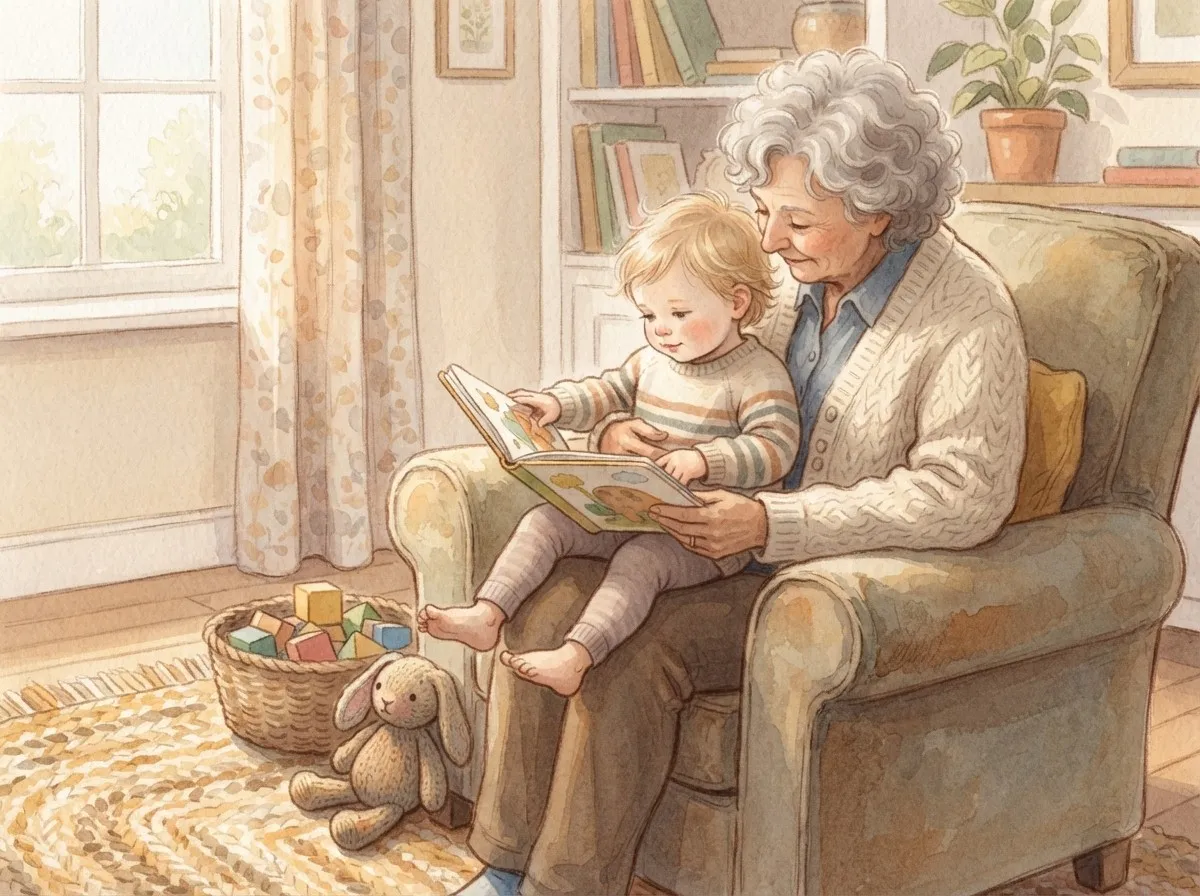
You’re hunting for a gift that won’t just be gummed and discarded. Personalised books for 1 year olds feel like a clever answer—if the book meets a baby where they actually are, rather than where a story expects them to be.
A book they won’t chew the corners off
A one-year-old isn’t waiting for a plot. What holds their gaze is a face they know, a rhythm they can rock to, and a handful of words that land the same way every time you turn the page. At this age, “reading” is a sensory event. It lives in the weight of the book on their lap, the sound of your voice dipping and lifting, the flash of recognition when a photo of their own face appears among the colour.
That’s why many parents find a personalised book works best when it leans into faces, not adventures. At CubFable, you can upload a photo so the child’s likeness is drawn into every illustration. Choose one of the soft, cadenced story ideas written for the very youngest—a bedtime lilt like Goodnight, Little Moon, or a garden wander like The Garden’s Tiny Parade. You’ll see the text before any drawing begins, so you can be sure each page holds just a line or two, paced for a baby’s attention.
The goal isn’t a tale they’ll follow. It’s a thing they’ll pat, point at, and want handed back as soon as it closes. If you’d like to browse the first-birthday story ideas, you’ll find options built for exactly that kind of quiet, face-to-face magic.
What makes a story work before they can talk
The words are secondary. Before a child can talk, a story works like a familiar song—the same voice, the same cadence, the same page turns every time.
Repetition is the engine. A simple refrain that returns on each spread (“Milo, where are your mittens?”) gives a baby something to anticipate. Naming familiar things—the family cat, their soother, a favourite mug—does the heavy lifting of recognition. When the book points to exactly what they know, it pulls them into a world that already feels like theirs.
Short page counts make that world manageable. Three or four turns, with a line or two of text each, let you finish before the wriggling starts. That little victory of reaching “the end” matters more than a complicated plot. Sturdy construction keeps the book in the game: board pages that survive being sat on, thrown and mouthed earn a permanent spot in the toy basket, and repeated encounters lock in the language.
The biggest shift, however, comes from seeing their own face. When a child’s likeness appears in the illustrations, the book becomes a mirror. Many parents find it’s that spark of self-recognition—“that’s me!”—that makes a baby reach for the book again the next morning. At CubFable, you upload a photo and the artist draws that face into every scene. A quiet story like The Torch Under the Pillow uses this magic with a gentle bedtime refrain, and you can find other calm options among the bedtime story ideas.
The photo that does more than a thousand words
At one, a photo in a book isn't a keepsake. It's a key.
A ten-year-old seeing their own face in an illustration thinks, "That looks like me." They process it as a representation, a clever bit of personalisation they can appreciate. A one-year-old does something far more primal. They stare. They jab a pudgy finger at the page. They look up at you, then back at the face, checking you've seen it too.
This is the difference recognition makes before language arrives. Pointing is one of the earliest bridges between the world inside and the world outside. When the thing they point at is their own self, drawn into a cosy bedtime scene or a garden wander, the circuit lights up differently. Many parents describe the moment their child first spots themselves—the sudden stillness, the double-take, the insistence on turning back to that page, the one with their face on it.
At CubFable, you upload a photo and that likeness appears throughout the book. For the youngest readers, this isn't vanity. It's a foothold. The story becomes a place they already inhabit, which is exactly where a one-year-old needs a book to begin.
Stories that grow with them past the first candle
A book chosen around the first birthday doesn’t have to be outgrown by the second. Pick a CubFable title aimed slightly ahead, and the same story can change jobs as the child does.
The shift is gradual. What starts as a pointing book becomes a naming book, then a book they follow from beginning to end.
At one, Goodnight, Little Moon is mostly a lap-sitting book. The named child appears in the pictures, the bedtime rhyme carries the page turns, and the story finishes before the wriggling starts. Many parents find the same title still gets requested at two and three, when pointing turns to naming: “moon”, “star”, “bed”, “me”. By four it has become a proper story with a clear shape they can follow from waking to sleep.
Teddy’s Turn to Share follows a similar arc. At first it is a cosy playroom scene with a familiar cuddly toy and the child’s face in the middle of it. Later it becomes a way to talk about taking turns. Milo Finds His Mittens and The Little Door in the Hedge are two more ages 2 to 4 titles that hold up as first real narratives.
That is the practical case for choosing a story slightly ahead of where a one-year-old is right now. You are not buying for the candle, then. You are buying for the shelf that still gets reached for at three and four.
What grandparents need to know before they order
Before you reach for your credit card, a few small checks turn a thoughtful gift into one that lands perfectly.
Get the name exactly right. Children’s names can trip up even family members. Is it Catherine with a C or Katherine with a K? Is there an accent on Zoë? Ask the parents to text you the spelling they use on official documents. A personalised book printed with the wrong name is nobody’s favourite story.
Choose a photo the child will recognise. A clear, front-facing snap taken in good light works best. Recent matters. A newborn photo won’t look much like the toddler unwrapping the parcel. The CubFable artist draws the child’s likeness into every scene, so pick an image where their face is unmistakably theirs.
Let the parents preview the text. CubFable shows you the story before any illustration is drawn. Forward that text to Mum or Dad. They might notice something you would never spot—that Uncle Matt somehow ended up with the family dog’s name, or that “Nana” is meant to be “Granny”. A two-minute check saves a lifetime of table jokes.
Arrives ready to wrap. The finished book is printed, bound and posted straight to your door. No assembly, no hunting for a gift bag that fits. If you are browsing for a particular occasion, you will find story ideas chosen for grandparents and plenty of first-birthday-friendly titles among the full collection.
Frequently asked questions
What makes a personalised book suitable for a 1 year old?
A suitable book is very short, with one or two lines per page, a repeated refrain, familiar objects and the child's own face. Sturdy pages help it survive being mouthed, sat on and thrown. The aim is a cosy lap-sitting experience built around pointing and naming, rather than a plot the baby has to follow.
Can a 1 year old recognise their own photo in a book?
Many one-year-olds do recognise their own face and point at it, look up at you, then look back. This self-recognition turns the book into a mirror. A clear recent photo, drawn into every illustration, gives them a strong foothold because the story becomes a place they already inhabit.
How do I choose the best photo for a personalised book?
Choose a clear, front-facing photo taken in good light, and make sure it is recent enough to look like the child now. Avoid newborn photos if the gift is for a first birthday. The artist draws the child's likeness into every scene, so the face needs to be unmistakably theirs.
Will a first birthday book still be used at age 3 or 4?
Yes, if you choose a story slightly ahead of the child's current stage. A book that starts as a pointing and naming book can become a first real narrative. Titles with a clear shape, like a walk through a garden or a search for lost mittens, hold up as the child grows into understanding the story.
Make one for your own little hero
Pick a story idea, add your child, and we print and post the finished book.
Browse story ideasKeep reading
Personalised books for 5 year old girls that she'll read until the spine goes soft
A story where the heroine has her name, her face and her own quiet courage is the one she reaches for night after night, long after the plastic toys are forgotten.
Personalised Books for 5 Year Old Boys: A Guide to Stories That Get Read Twice
To find personalised books for 5 year old boys that become bedtime favourites, look for stories that give him a real mission, with his own name and face inside.
Why personalised books for toddlers with photo are the ones they reach for first
A toddler who spots their own face in a story will sit through every page, pointing at their illustrated self long before they can read a single word.