

A Custom Children’s Book with Photo: How a Face Becomes a Story’s Heart
A custom children’s book with photo that turns a child’s face into the heart of a painted story, not a glued-in snapshot.
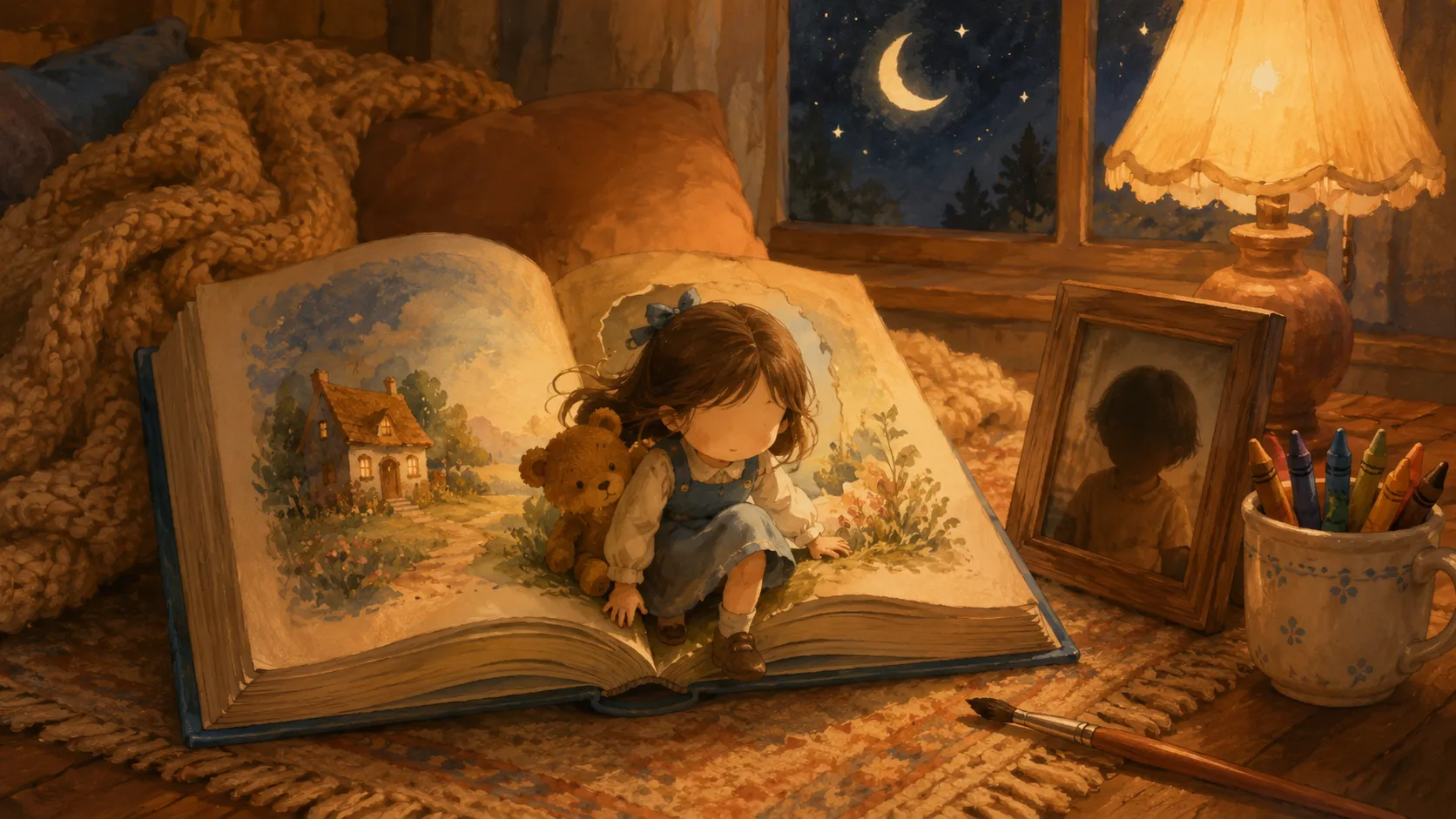
You might imagine a standard picture book with a photo stuck inside the front cover. A custom childrens book with photo is something far more personal. The child’s face isn’t an afterthought; it’s the blueprint from which every illustration is built.
What You’re Actually Buying When You Order a Custom Childrens Book with Photo
With CubFable, you start by choosing a story idea from the catalogue. Perhaps “Goodnight, Little Moon” for a two-year-old, or “The Lantern in Whispering Wood” for a five-year-old. You enter the child’s name, a few details that shape the tale, and upload a photo. The text is written first, and you get to read and approve it before any drawing begins. This way, the story voice feels right, and the plot matches the child’s age.
Once you give the nod, an illustrator brings the character to life using the photo as a direct reference. The result is not a generic figure with a snapshot glued on top: the child’s hair, eyes, and smile are drawn into every scene, whether they’re tiptoeing through a whispering wood or helping bake the only cake that can save the day. The character moves, plays, and reacts with expressions that look like your child’s own.
The finished book is printed, bound, and posted to you, with the child’s name woven through the narrative. If you’re eager, you can read it on screen as soon as the story is generated. Browse the story ideas to find a tale that fits the child you have in mind. For families with children aged two to ten, a custom childrens book with photo becomes a keepsake because the child doesn’t just hear a story—they see themselves living it.
The Photo Matters More Than You Think
A good photo does more than show what the child looks like. It determines whether the finished book feels genuinely like them, or merely like a character who shares their hair colour. The difference sits in three practical choices you make before you even tap "upload."
First, pick a shot where the child's face is clearly visible, ideally looking straight at the camera. A crisp, well-lit head-and-shoulders photo taken within the last few months works best. Second, match the photo to the child's current age. A baby picture won't help an illustrator draw the six-year-old reading "The Clockmaker's Secret Map." Third, skip the filters. Sepia tones and bunny ears might look charming on your phone, but they hide the very details, the exact curve of a smile, the particular shape of an eye, that the artist needs to create a recognisable portrait.
The illustration style does something clever with that photo. It doesn't just trace it. A good artist softens the image into the story's painted world, blending the child's real features into the gentle watercolour of a bedtime tale or the bold lines of a space adventure. The character feels hand-drawn, not photocopied in. That's the difference between a book that looks like a novelty gift and one that feels like it always belonged on the child's shelf.
Why text approval matters before the art begins
This is the step many parents don't realise they need. You see the full story text first. If the phrasing doesn't sound like something you'd read aloud, or if a plot point misses the mark for your child's temperament, you can adjust it. Only after you're happy does the illustrator start work. That means the art never gets built around a story that doesn't sit right. For a custom childrens book with photo, the words and the image carry equal weight. Getting the first right before committing to the second turns a nice idea into a book you'll genuinely enjoy reading again and again.
Why the Story You Pick Changes the Whole Feel
The story title is your first age filter. A two-year-old learning about toilets and routines will connect with "The Potty With a Bell Inside" because it stays close to home. A six-year-old who loves sea creatures is more likely to ask for "Captain Coral and the Missing Pearl" again than for a generic adventure. By eight or nine, a child who enjoys puzzles will lean into "The Clockmaker's Secret Map", where the mystery carries the plot as much as the hero does.
Many parents find that matching a current obsession, whether it is diggers, dragons, oceans or riddles, keeps a personalised book on the bedtime pile far longer. The title also sets the emotional temperature. A home-based tale feels cosy. A quest feels exciting. A mystery feels clever.
A simple guide:
- Ages 2 to 4: choose a title rooted in home, routine, garden or playroom.
- Ages 5 to 7: choose a title with a clear mission, creature or place.
- Ages 8 to 10: choose a title with clues, puzzles or a wider world.
When the story fits the child's age and current enthusiasm, the photo personalisation stops being a novelty. It starts to feel like proof that the child belongs in that world. Browse the full catalogue to filter by age, occasion and theme.
How to Get a Photo That Looks Great in the Finished Book
The photo you upload does not appear as a printed snapshot inside the book. Instead, the illustrator uses it as a reference to draw the child’s face into every scene. That single upload decides whether the character on the page actually looks like your little one, so a few practical choices make a real difference.
Pick a well-lit, forward-facing shot. The child should be looking directly at the camera, with no hat, sunglasses or dummy covering their features. Natural daylight near a window works better than a dim living-room snap. The artist needs to see the shape of the chin, the set of the eyes and the way the hair falls. A shadow across half the face hides details that would make the illustration feel off.
Choose a photo taken recently. If you are ordering for a four-year-old, upload a picture from this season, not the six-month portrait still on the fridge. A photograph that reflects the child’s age now helps the artist capture the right proportions. The gap between a toddler face and a five-year-old face is subtle, but you will notice it when the book arrives.
Keep backgrounds simple. A busy playground behind the child or a sibling peeking into frame can distract the artist, even if the main face is clear. A plain wall or grassy lawn works beautifully. The goal is a clean reference that lets the illustrator focus on what matters most: your child’s expression, translated into the world of dragons, ocean quests or bedtime gardens.
What Happens After You Click Order: CubFable’s Way
After you pick a story that fits your child’s age and current enthusiasm, the real making begins. There is no waiting room. You move straight into shaping the book.
- Choose your story. Browse the full catalogue of story ideas by age, theme or occasion – maybe a bedtime tale for a two-year-old or a dragon adventure for a five-year-old.
- Add the child’s details. Enter their name as you want it to appear, a few personal notes like a favourite colour or a nickname, and upload a clear forward-facing photo.
- Approve the story text. Before a single illustration is drawn, you read the full text. You can adjust or confirm everything while it is still just words on a screen.
- Artwork to print. Once you approve, illustrators draw the scenes, weaving your child’s likeness into every page. The book is then printed, bound and posted to you.
- Read on screen straight away. The moment the story is generated, a digital version is ready. You can read it together while the physical book is being made.
The whole experience – story choices, instructions, prompts and the finished book – is available in eight languages: English, Spanish, French, German, Italian, Portuguese, Turkish and Arabic. Stories are written to land with children from age two all the way up to ten, with word counts, themes and illustration styles matched to each stage.
Frequently asked questions
How does a custom children’s book with photo work at CubFable?
You choose a story, enter the child’s name and a few details, upload a clear photo, then read and approve the full story text before any illustrations are drawn. An illustrator then uses the photo as a reference to draw the child into every scene, and the finished book is printed and posted.
What kind of photo should I upload for a custom children’s book with photo?
Use a recent, well-lit forward-facing shot without hats, sunglasses, or heavy filters. The child should look directly at the camera, against a simple background. This gives the illustrator the clearest view of their features, so the drawn character feels truly like your child.
Can I change the story before the book is illustrated?
Yes. CubFable shows you the complete story text first. You can adjust phrasing, suggest changes, or confirm everything. Only after you are happy does the illustrator start drawing, ensuring the art never gets built around a story that doesn’t feel right for your child.
What ages is a custom children’s book with photo suitable for?
CubFable stories are written for children aged two to ten. The catalogue is split by age and theme: home and routine tales for toddlers, missions and creatures for ages five to seven, and puzzles or mysteries for eight to ten-year-olds.
Make one for your own little hero
Pick a story idea, add your child, and we print and post the finished book.
Browse story ideasKeep reading

Personalised books for 5 year old girls that she'll read until the spine goes soft
A story where the heroine has her name, her face and her own quiet courage is the one she reaches for night after night, long after the plastic toys are forgotten.
Personalised Books for 5 Year Old Boys: A Guide to Stories That Get Read Twice
To find personalised books for 5 year old boys that become bedtime favourites, look for stories that give him a real mission, with his own name and face inside.
Personalised books for 1 year olds: what actually holds a baby’s gaze
A one-year-old needs faces, rhythm and familiar things more than plot, and the right personalised book can grow with them past the first candle.