

How to Help a Child Start School Without Tears
The first day of school goes better when a child feels safe, not when they can recite the alphabet—practical ways to build that confidence.
If you are trying to work out how to help a child start school without tears, the answer may be smaller than you think. It is rarely about flashcards. The first day goes better when a child feels safe enough to walk in, not when they can recite the alphabet.
It’s not about knowing letters or numbers
School readiness is mostly emotional and practical. The child who can separate without panic, ask an adult for help, put on their own shoes and cope with a new routine already has the strongest start. These are the skills that carry the first week, not early reading or neat number work.
Many parents worry about academic skills before school begins. Teachers often say that confidence and independence matter far more on day one. A child who can say "I need the toilet" or "I don't know where my lunchbox is" can get help quickly. A child who knows ten letters but cannot manage their shoes may still feel wobbly.
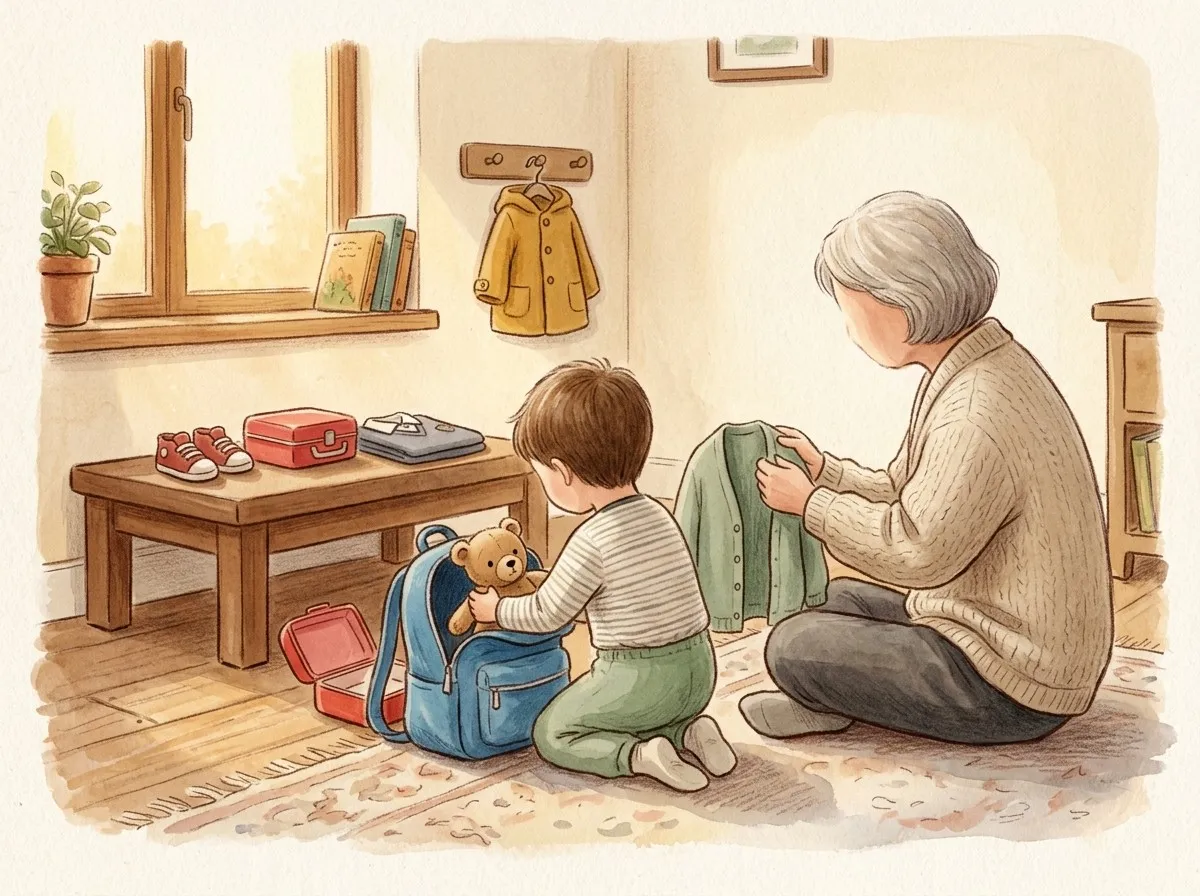
The routine itself matters, too. Children settle faster when they know what happens next: coat off, bag away, hello to the teacher, a familiar spot to sit. You can practise these small steps at home as play. Let your child carry their own bag, undo a zip or put on shoes while you stay nearby.
For some children, seeing themselves in a first-day-of-school story makes the whole idea feel familiar before the real morning arrives.
Make the environment feel like a place they already know
Fear shrinks when the unknown becomes ordinary. The goal is not to talk about school until it feels big and important. It is to let the place, the route and the rhythm soak in quietly, without pressure, long before the first morning.
Start with the journey itself. Walk or drive the route several times, on a Sunday morning or a quiet Tuesday afternoon when nobody is rushing. Point out a crooked tree, a blue front door, the yellow postbox near the corner. The day you make the trip for real, the landmarks will already belong to your child.
Play on the school playground after hours and at weekends. Climb the small climbing frame, sit on the bench, count the hopscotch squares. Let your child own the space while it is empty of demands. The slide they have slid down ten times is just a slide, not a test.
Later, sit together and scroll through the school website photographs. Look at the lunch hall, the book corner, the sand tray. Put names to faces. A hall full of unknown children is unsettling; a hall that looks like the one on the laptop is less so.
Books set in classrooms and playgrounds do something similar. They wrap the new routine in story, where the child is the one who knows what happens next. The Peg That Knew Your Name and The Second-Newest Kid place a familiar character—your child—right at the centre of coat pegs, carpet time and first friendships. You can browse the first-day-of-school story ideas and read one together on screen before bedtime. Many parents find that repeated, low-pressure exposure through story turns a mysterious building into a place their child already half-knows by heart.
Talk about feelings without making them the centre of every conversation
School chat works best when it feels like part of ordinary life, not a daily grilling. A constant "Are you excited? Are you worried?" can make a five-year-old feel there is a right answer.
Name the mix casually. You might say, "Some children feel excited and a bit wobbly at the same time. I wonder what you feel." Then let them answer, or not. If they say nothing, let it sit. The goal is to leave a door open, not push them through it.
Use low-stakes moments: drawing, bath time, building blocks, walking to the shop. While they colour, ask "What do you think the teacher will have on the walls?" or "What would you put in your school bag if you could pack anything?" These questions are playful, not probing. A child who clams up when asked directly may talk freely while their hands are busy.
Let them own their predictions, even odd ones. If they imagine a dinosaur in the playground, do not correct it. Ask what the dinosaur might eat at lunch. The conversation should feel like a game they can leave.
Space matters. Some children need to chew on an idea for days before saying more. You can simply say, "You can tell me later if you want." That silence is not avoidance; it is processing.
Let them pack their own bag and wear the uniform around the house
A bag that sits untouched in the corner belongs to the unknown. Once your child has packed it, unzipped every pocket and carried it around the house, it belongs to them.
Let them choose the bag, if you can. A three-year-old who picks the blue rucksack over the grey one begins to invest in school as something they shape. When it arrives, pack it together: spare pants, empty lunchbox, a familiar toy. Label it together. Writing their name on a tag together makes it theirs.
Lay out the uniform on a Saturday morning, not the night before. Let them pull up the socks, button the cardigan, twist in front of the mirror. Wear it for ten minutes, then hang it up. Many parents find that a few dress rehearsals strip the uniform of its strangeness. By the first morning, the stiff collar feels known.
Snap the lunchbox lid, unsnap it, pull out a yoghurt pot and put it back. A lunchbox they can open themselves is a small victory. Hang the packed bag on a low hook and let them carry it around the house, five minutes at a time. The weight on their back becomes part of their body map, not a surprise.
No conversation needed. Just the motions, side by side, until the kit feels like theirs. On the first morning, the objects around your child will be allies.
A story where they are the brave starter
A personalised school story puts your child at the centre of the uncertain bits: the coat peg, the carpet square, the moment a new name is called. With CubFable, a parent or grandparent picks a school-themed story idea such as The Second-Newest Kid or The Peg That Knew Your Name. You enter the child’s name, a few familiar details and, if you wish, a photo so the illustrations mirror their face.
The story text is shown to you for approval before a single illustration is drawn. That means the finished book is the story you already know suits the child, printed, bound and posted.
Reading it together lets a child rehearse the first day without anyone saying “this is practice”. You are simply following a character who shares their name through the door, into the classroom and home again. Many parents find that the story becomes the child’s script for narrating what will happen. You can browse the first-day-of-school story ideas and read one on screen together before choosing.
Frequently asked questions
What matters more when a child starts school, academic skills or emotional readiness?
Emotional and practical readiness matter far more than knowing letters or numbers. Teachers often say that confidence, independence and the ability to ask for help make the biggest difference on day one. A child who can manage their own shoes, separate without panic and follow a simple routine settles faster than one who can recite the alphabet but feels wobbly.
How can I prepare my child for the first day of school without causing anxiety?
Keep the preparation low-pressure. Walk the route, play on the school playground, and look at school photos together without making it a big talk. Let your child pack their own bag and wear the uniform for short dress rehearsals. Talking about feelings casually, while colouring or building blocks, often works better than direct questioning. The goal is familiarity, not interrogation.
Make one for your own little hero
Pick a story idea, add your child, and we print and post the finished book.
Browse story ideasKeep reading
A Personalised Story That Makes Potty Training an Adventure
A personalised potty training book turns your child into the hero of a gentle adventure, making the milestone feel like play instead of pressure.
How Personalised Books for the First Day of School Calm the Wobbles
A child who sees their own face, name and favourite toy inside a first-day story is far more likely to talk about worries, because the book has already said it.
Personalised Books for 2 Year Olds: How to Pick a Story They'll Actually Love
When a book feels like theirs and fits their world, it does not sit on a shelf but gets carried to the breakfast table and read until the spine softens.