Personalised Books for 10 Year Olds: Novels They’ll Reread
Why ten-year-olds need personalised stories that trust their intelligence, not just paste their name on the cover.
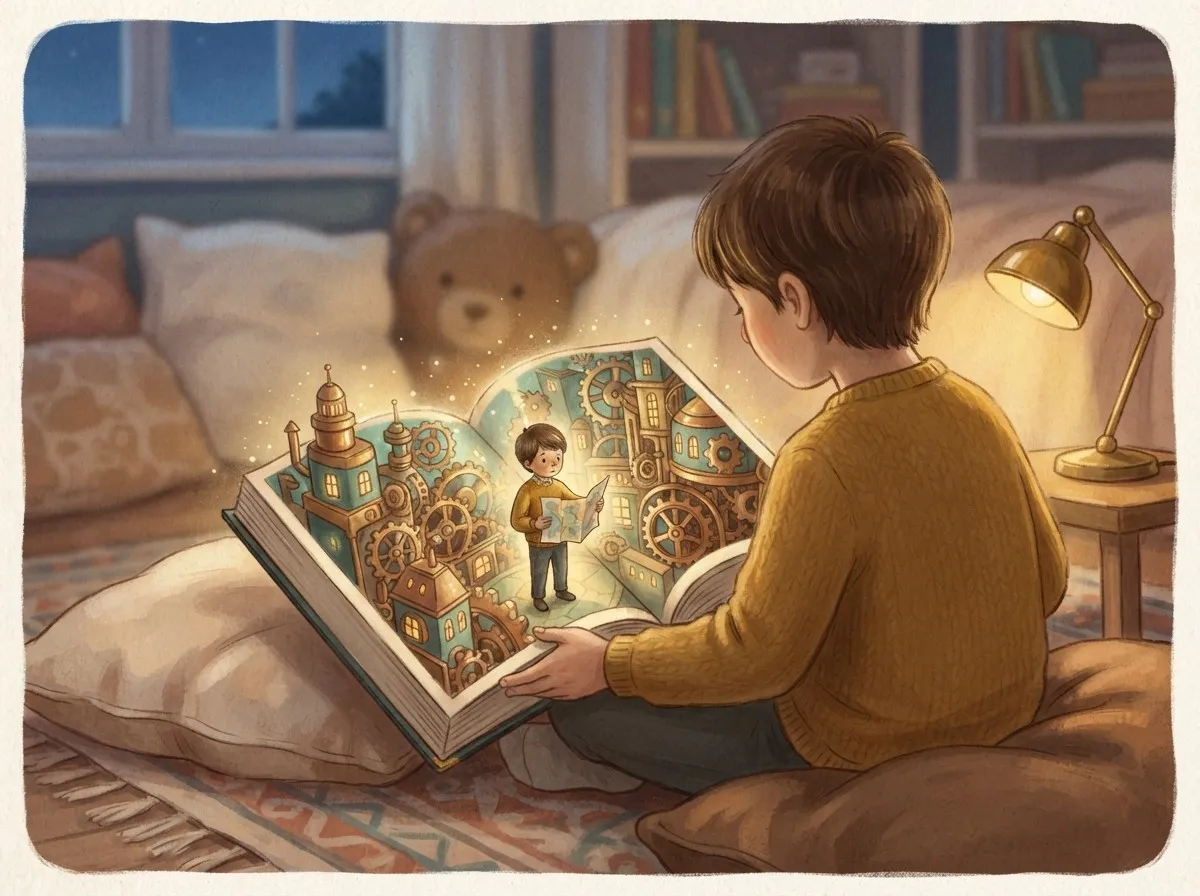
By ten, most “personalised books for 10 year olds” are too young to hold their attention. A name on a cover isn’t enough – this reader wants a story that feels like a real novel, where the main character solves problems without an adult swooping in.
What a Ten-Year-Old Actually Wants From a Story
Around ten, reading tastes shift decisively. The steady diet of picture books no longer satisfies. This reader wants layered plots, characters who make tough decisions, and a protagonist who solves problems without an adult stepping in. Many parents notice their ten-year-old suddenly abandoning books that feel too young – not because the theme is childish, but because the story doesn’t trust them to handle complexity.
A personalised book for this age has to earn its place on the shelf. Adding a name isn’t enough. The child must recognise themselves in the decisions the character makes. A mystery where they crack a hidden code, an eco-adventure that hinges on their quick thinking, a diplomatic stand-off between giants – these are the kinds of plots that fit.
CubFable lets you choose a story idea for older readers, like “Codebreakers of Copper City” or “The Last Seed of Sunvale”. You enter the child’s name, upload a photo, and approve the entire text before illustration. The finished hardback is printed and posted, and the child can also read it on screen immediately.
The Difference Between a Name in a Book and a Real Character
Sliding a child’s name into a ready-made adventure can feel like a magic trick to an adult. To a ten-year-old, it’s often the opposite. They spot the seam immediately. The sentence that swerves awkwardly to include their name, the description that could belong to anyone, the hero who never hesitates in a way they would. A name on the cover doesn’t make a character feel real. Choices do.
What a ten-year-old craves is a protagonist who shares their particular logic. Someone who solves a locked-room mystery not with sudden bravery but with quiet observation, because that’s how they’d do it. A character who carries a strange collection of keepsakes like “The Jar of Loose Buttons”, or who navigates the diplomacy of opposing giants not through combat but through listening. Seeing themselves in the story stops being about matching hair colour and starts being about recognising their own mind at work.
That shift means the personalisation has to reach deeper. It’s not enough to borrow a child’s appearance. The book needs to echo their inner rhythm: the way they overthink a decision, the specific jokes that land with them, the small fears they’d never say aloud but recognise when a character admits them. Many parents find that when a ten-year-old reads a story in which the protagonist’s internal world mirrors their own, the book is kept beside the bed for weeks, not shelved after one polite thank-you. That’s the difference between a placeholder name and a real character. One gets a nod. The other gets reread.
Stories That Match the Ten-Year-Old Mindset
At ten, a story needs a problem worth solving without a parent hovering. CubFable’s older story ideas lean into exactly that. In "Codebreakers of Copper City", the reader is the codebreaker navigating a future city where each cracked cipher opens the next locked district. The clues are not handed over, they are earned through pattern spotting and patience. That sense of "I worked it out before the characters did" is what keeps many ten-year-olds turning pages.
"The Clockmaker's Secret Map" follows a different pull: a hidden map, a town full of small deceptions, and a protagonist who must decide who to trust. The mystery is not scary, but it is genuinely puzzling. There is no adult ready with the answer. The child in the story has to read situations, test the evidence, and live with getting it wrong once or twice.
Other plots for this age use worlds and skills rather than whodunits. "The Debate of the Mountain Giants" puts the reader in the middle of a tense negotiation, where listening matters more than force. "The Last Seed of Sunvale" turns a failing landscape into a problem of invention and responsibility. These are not lessons with a story attached. They are plots where independence is the engine. A ten-year-old recognises themselves in that: capable, wary of being managed, and ready to be trusted with something complicated.
When the Child Looks Like the Hero
By ten, children have a sharper eye for detail than most adults realise. They notice when a character’s hair doesn’t quite match theirs, when glasses are missing, when the skin tone is close but not close enough. It’s not vanity. It’s a quiet need to be truly seen in the stories that matter.
At this age, visual representation starts carrying a different weight. Seeing a protagonist with the exact same curls, the same gap-toothed smile, or the same favourite colour frames stepping into a glacier expedition or cracking a city-wide cipher feels less like make-believe and more like a glimpse of what’s possible. The child doesn’t just read about bravery. They see someone who looks unmistakably like them being brave. That matters more the closer they get to the edge of adolescence, when self-consciousness can creep in.
CubFable’s photo-upload option makes this possible without turning the book into a caricature. You upload a clear picture and the illustrations are drawn around your child’s real features: the shape of the face, the hair texture, the glasses if they wear them. The result is a character who genuinely resembles them in the pages of a story like "The Library Between Worlds" or "The Clockmaker's Secret Map". Many parents find that when a child spots their own face making clever, courageous choices, the book becomes more than a read. It becomes a small, steady mirror of who they are and who they might become.
From Screen to Shelf: How a Personalised Book Gets Made
You begin by browsing the full catalogue of story ideas, sorted by age and theme. For a ten year old, that might mean "Codebreakers of Copper City" or "The Clockmaker's Secret Map". Once you choose a world, you enter the child's name, a few details, and optionally a clear photo. The photo is optional, but it makes the illustrations feel like your child rather than a generic character.
Before any drawing starts, CubFable shows you the actual story text. You read it through, check the name appears naturally, and approve it. Only then are the illustrations created around the details you provided. This is the step many parents appreciate most: nothing goes to print until you have seen the words your child will read.
After approval, the book is generated and you can read it on screen immediately. If you want the full gift experience, the finished hardcover is printed, bound and posted to your door. That final object is the part a ten year old picks up, weighs in their hands, and keeps beside the bed.
A Gift That Outlasts the Latest Gadget
A ten-year-old’s room often hums with screens, controllers, and plastic pieces that lose their shine by the end of the school holidays. A hardcover book lands differently. It has weight, a spine that cracks gently on first opening, pages that smell faintly of paper and ink. It asks for nothing except a quiet corner and a reading light.
For grandparents, that physical presence matters more than any tech spec. They remember giving gifts that became part of a child’s everyday landscape, not landfill. A personalised book with their grandchild drawn onto every page sidesteps the novelty trap entirely. It’s not a passing amusement. It’s a novel with their grandchild at the centre, solving a mystery in “The Clockmaker’s Secret Map” or negotiating peace between giants. The child doesn’t just unwrap it. They climb inside it.
By Boxing Day, the plastic toys are often forgotten under the sofa. But a hardcover story where the hero shares your grandchild’s name, face, and courage tends to stay beside the bed, reread until the corners soften. Many grandparents find that these books become the present the child reaches for when visitors arrive, eager to show themselves as the main character. That’s a gift that keeps giving long after the batteries have run flat. Browse the gift ideas for grandchildren to see stories built for that kind of staying power.
Frequently asked questions
What makes a personalised book suitable for a ten-year-old?
A ten-year-old needs a story that feels like a real novel, not a picture book with their name inserted. CubFable stories give them the lead role in mysteries and adventures where they solve problems independently. The child’s photo and details shape the illustrations, and you approve the text before printing so the name never feels forced.
Can I read the whole story before it's printed?
Yes. Once you choose a story idea, you enter the child’s name and any other details, and CubFable shows you the full text. You can check every page, see exactly where the name appears, and approve everything before the illustrations are created and the book goes to print.
Make one for your own little hero
Pick a story idea, add your child, and we print and post the finished book.
Browse story ideasKeep reading
Personalised books for 5 year old girls that she'll read until the spine goes soft
A story where the heroine has her name, her face and her own quiet courage is the one she reaches for night after night, long after the plastic toys are forgotten.
Personalised Books for 5 Year Old Boys: A Guide to Stories That Get Read Twice
To find personalised books for 5 year old boys that become bedtime favourites, look for stories that give him a real mission, with his own name and face inside.
Personalised books for 1 year olds: what actually holds a baby’s gaze
A one-year-old needs faces, rhythm and familiar things more than plot, and the right personalised book can grow with them past the first candle.