
Personalised Books for 6 Year Olds: How to Pick Stories They'll Reread
A six-year-old wants proper stories with real plots, and a personalised book that prints their name on the cover hands them permission to step in.
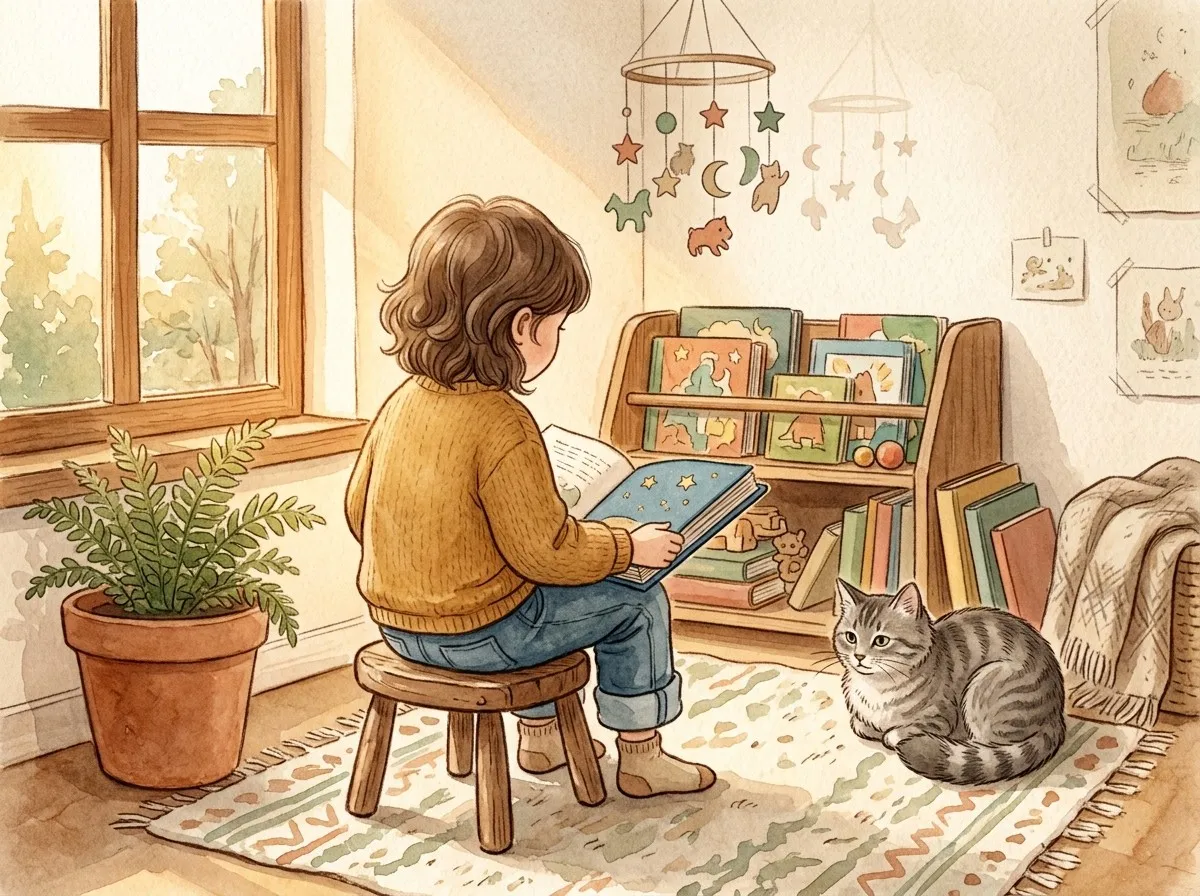
If you are hunting for personalised books for 6 year olds, you have probably noticed the shift. The picture books that worked at four suddenly feel too slight, and the child who once snuggled in for any tale now has opinions. Lots of them.
What a six-year-old actually wants from a story
A six-year-old stands in a doorway between two kinds of reading. On one side, the cosy lap-and-point-along books of toddlerhood. On the other, chapter books with real plots and characters who make choices. They want to walk through, but they still want you waving from the step.
This is the age when stories stretch. A single gag no longer carries a book. Six-year-olds crave a chain of events, a problem that takes more than one try to solve, and a main character who feels something complicated: nervous but determined, cross but sorry afterwards. They also want that character to look like them.
Independence is the quiet engine behind everything at six. Many parents find their child suddenly wants to hold the book, turn the pages, and read bits aloud without help. A story that prints their name on the cover hands them permission to do exactly that. When the hero shares their haircut, their glasses, their exact shade of skin, the book stops being a performance and starts being a mirror.
Yet the warmth still matters. A six-year-old may act grown up, but they are not. The best stories hold space for both sides: a plot with real stakes, and the reassurance that the child on the page is brave, loved, and right in the middle of their own adventure.
browse the story ideas for this age and you will spot the pattern: dragons who need kindness, space rescues that take teamwork, neighbourhood mysteries where one small person makes the difference. These are not baby books. They are proper stories with a child-shaped heart.
Why a child’s own name lands differently at six
At two or three, a name in a book is a bright signal: that's me. By six, the name does heavier work. It stops being a label and starts being a small proof of consequence. The child is not just in the story. They are the reason the story turns.
Many parents find that a six-year-old reads their own name differently from a toddler. A toddler points at it. A six-year-old carries it through the narrative, comparing choices, noticing when the character feels embarrassed or brave, and wondering what they would do next. The name becomes a place to stand, not just a word to spot.
That shift changes what personalisation can do. A personalised book for a six-year-old can support self-image because the hero with their face and name is shown solving problems, making mistakes and trying again. It can stretch empathy because the plot asks them to consider how another character feels. And it can build a quiet sense of agency because the named child makes a decision that moves the story forward.
The best versions stay concrete. Instead of telling a child they are kind, a story like Dragon School's Kindest Flame shows the main character choosing kindness when it costs a little. Instead of saying they are brave, The Day the Stabilisers Came Off lets them wobble, steady themselves and ride on. At six, the name is not the end of the magic. It is the entry point.
How to pick a story idea they won’t outgrow by bedtime
A book that gets read once and shelved is a missed opportunity. At six, the right story feels like a den: a place to return to, notice something new, and perform favourite lines aloud. The trick is anchoring the theme to a passion that already hums in your child’s real life, not one you wish they had.
Start with what they build in their spare moments. A child who turns the sofa into a rocket will stretch Rocket Rescue on Planet Blue over several nights, spotting details in the illustrations you missed. A child who buries "treasure" in the garden is ready for a mystery with real clues. The Box Nobody Packed gives them a puzzle that unfolds at their pace, and the satisfaction of solving it before the last page.
Nature lovers often prefer a quest that leaves room for quiet. The Lantern in Whispering Wood carries tension without noise, letting a child’s own courage fill the silence. Friendship frameworks work best when the cooperation feels earned. The Fort of Two Flags shows two characters figuring out how to share a space, which mirrors the negotiations six-year-olds navigate daily. That kind of story gets re-read because the child recognises the problem and wants to watch the solution again.
The golden thread: pick a framework that matches their real-world curiosity, not just a topic you find worthy. When the story reflects an interest they already chase, re-reading becomes their idea, not yours. browse the story ideas by theme to find the one that slots into that existing spark.
The moment a gift becomes a keepsake
When a six-year-old opens a book and sees their own face drawn into every page, the present tips into something else. It stops being a story that happens to them and starts being a portrait of exactly who they are right now: the gap-toothed grin, the way their hair still sticks up after swimming, the favourite jumper they refused to take off all autumn. The photo-upload feature is the quiet lynchpin. A parent uploads a clear snapshot, and the illustrations echo the child’s features, not a generic template. The result is a book that feels made for one person only, because it is.
That specificity is what parents and grandparents notice first. Long after the child has moved on to longer chapter books, the small hardback stays on the shelf as a memory object. Grandparents, in particular, often describe the book as a gift that gives back: every visit, they turn the pages with a child a little taller and see the earlier version still smiling from the painted page.
Because the text is approved before illustration, families fine-tune details until the character reflects the child’s personality, not just their appearance. That care makes the book land with a weight few off-the-shelf gifts carry. By the time the child outgrows the story, the book has absorbed enough shared afternoons and read-aloud giggles to earn a permanent spot on the shelf. It becomes a keepsake because it holds a face and a name at a specific age, frozen in ink, ready to be opened again.
From a parent’s idea to a bound book: how CubFable works
The process starts with the story idea, not the name. You pick a premise from the catalogue: browse the story ideas. For a six-year-old, that might mean The Cloud Factory Mix‑Up for a child who watches the sky, The Box Nobody Packed for a solver who likes a home mystery, or The Lantern in Whispering Wood for a quieter forest quest.
Then you enter the child’s name and a few details that shape the story around them. A photo is optional but useful. Upload a clear snapshot and the illustrations are drawn to echo the child’s features, from a familiar haircut to a particular grin.
Before any drawing begins, CubFable shows you the full story text for approval. That is the moment to check that the name, the details and the tone all feel right. Only when you are happy does the illustration work start.
The finished book is printed, bound and posted, but you do not have to wait for the parcel to read it. The story appears on screen as soon as it is generated, which helps when a birthday or a grandparent visit is closing in. The site is available in eight languages: English, Spanish, French, German, Italian, Portuguese, Turkish and Arabic. Stories suit children roughly between two and ten, and for a six-year-old the five to seven age band tends to be a comfortable match.
Frequently asked questions
What should I look for in personalised books for a six year old?
Look for a proper story with a clear problem, a chain of events and a main character who feels a real emotion, rather than a simple name spotting book. At six, children want plots that stretch, a hero who looks like them, and just enough reassurance. Choose themes that match a current interest, such as space, dragons, nature or friendship, so the book becomes something they return to.
How does CubFable personalise the illustrations for a six year old?
CubFable uses an uploaded photo to draw the child's features into the illustrations, including details like a familiar haircut, glasses or a favourite style of clothing. Families can approve the full story text before illustration begins, and can fine-tune details so the character reflects the child's personality. The goal is a book that feels made for one child, not a generic template.
What story themes work best for six year olds?
Themes that match a child's existing curiosity tend to work best, including space rescue, gentle dragon quests, woodland mysteries and friendship challenges. Six-year-olds want a plot with real stakes, but the best stories also hold space for warmth, so the named child can be brave, make mistakes and try again. Browse the story ideas by theme to find the right fit.
Can I read the personalised story before it is printed?
Yes, CubFable shows the full story text for approval before any illustration work begins, so you can check the name, details and tone. Once you are happy, the illustrations are created and the finished book is printed, bound and posted. You do not have to wait for the parcel, because the story appears on screen as soon as it is generated.
Make one for your own little hero
Pick a story idea, add your child, and we print and post the finished book.
Browse story ideasKeep reading
Personalised books for 5 year old girls that she'll read until the spine goes soft
A story where the heroine has her name, her face and her own quiet courage is the one she reaches for night after night, long after the plastic toys are forgotten.
Personalised Books for 5 Year Old Boys: A Guide to Stories That Get Read Twice
To find personalised books for 5 year old boys that become bedtime favourites, look for stories that give him a real mission, with his own name and face inside.
Personalised books for 1 year olds: what actually holds a baby’s gaze
A one-year-old needs faces, rhythm and familiar things more than plot, and the right personalised book can grow with them past the first candle.