

Adventure Books for Children Who Love Pirates: How to Pick a Proper Treasure
A practical guide to choosing adventure books for children who love pirates, with age-by-age tips, gift pairings and a way to put your child in the story.
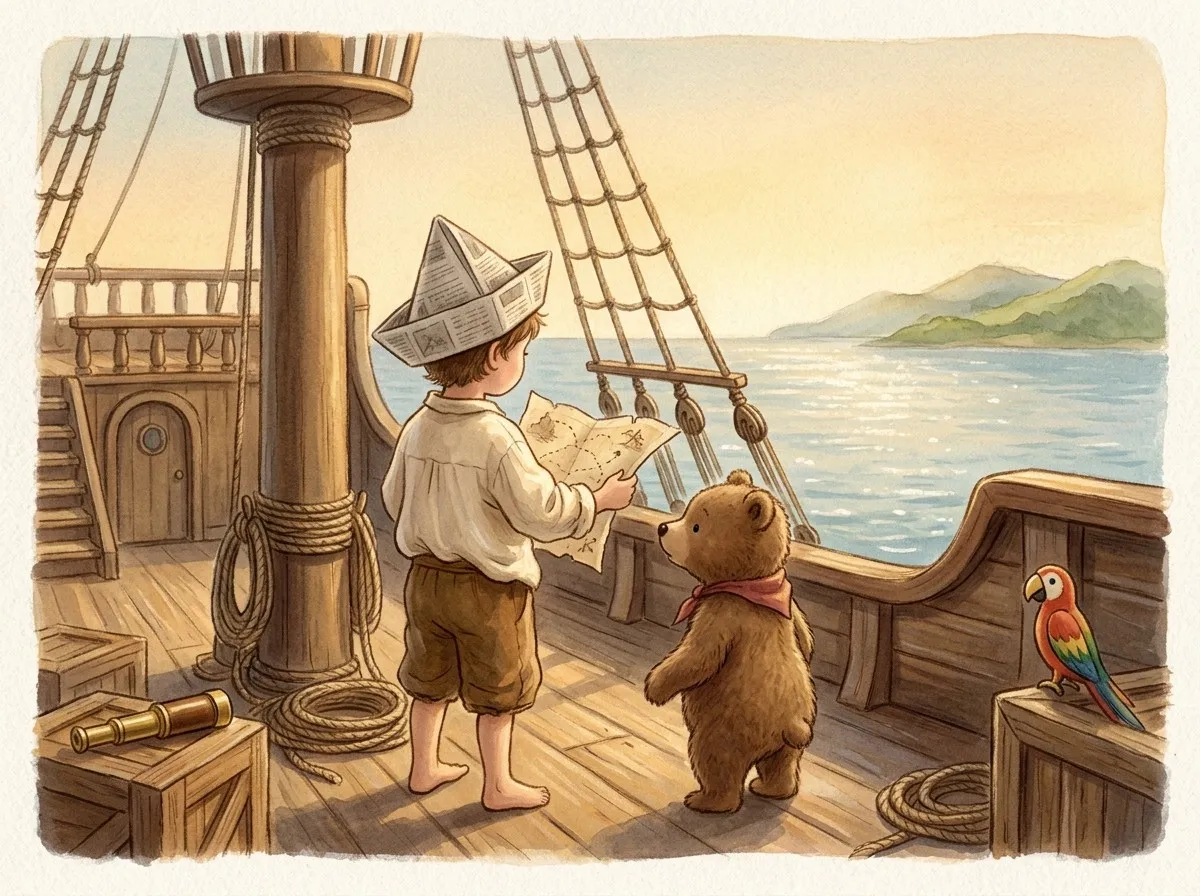
You’ve searched “adventure books for children who love pirates” and found dozens of titles with skull-and-crossbones covers. But a pirate fan doesn’t just want a pirate sticker on the front—they want the real thing.
What a pirate-loving child actually wants from a book
Strip away the eye patches and the cutlasses and you’re left with a very specific wish list. A child who dreams of pirates wants a creased treasure map, not just a drawing of one. They want a crew with names and quirks, a ship that creaks and a secret code that actually needs cracking. Most of all, they want a hero roughly their own size who gets to make decisions—turn left at the reef or hide in the cove—and see that choice ripple through the pages.
That’s the gap so many pirate-themed books fall into. They dress a flat character in a tricorn hat and call it a day. The treasure is found by page five, the crew are interchangeable and the child is left wondering why nobody asked them what they would have done. Real pirate magic happens when the story trusts its reader with the map and says, “Your move.”
A satisfying ending matters just as much as the swashbuckling. The loot should feel genuinely earned. A twist or a proper laugh along the way helps, too—many parents notice a well-placed joke is what sends a book back off the shelf for a third reading.
This is where a personalised story changes everything. When a child’s own name is written into the adventure, they aren’t watching from the side. They are the one studying the riddle, choosing the route, facing the kraken or the storm. CubFable lets you take a story idea like Captain Coral and the Missing Pearl (an ocean quest for five- to seven-year-olds) or The Clockmaker’s Secret Map (a code-cracking mystery for eights to tens), and place your child at the centre. You enter their name and details, upload a photo so the illustrations look like them, and see the text before a single picture is drawn. The result is a real, bound book where the treasure map leads exactly where your young pirate hoped it would. If you’re starting your search, you can browse the adventure and fantasy story ideas and pick the one that feels most like the crew they’d want to join.
Match the pirate book to the child, not just the age on the cover
A two- to four-year-old does not need a plot with a hidden traitor. They need a refrain they can shout before you turn the page, or a repeated knock at the cabin door. Keep sessions short and expect to stop after a few pages. Read-aloud stamina at this age is measured in minutes, not chapters.
For five- to seven-year-olds, look for maps and puzzles. A simple key, a route to trace with a finger and one clue per spread will do more than a crowded illustration. Many parents find this is the age when a child wants to solve the page before you read it. Choose a story with a clear problem and a crew your child can name.
Eight- to ten-year-olds often want longer mysteries and real historical detail. Give them a riddle that runs from first page to last, plus the small facts that make a ship feel real: salt beef, signal flags, a harbour at low tide. Their read-aloud stamina can stretch across chapters, but check whether they want you to read or to take the book to their room.
Read-aloud stamina matters more than the age on the cover. A six-year-old who listens for ten minutes may still enjoy a picture-led quest, while a ten-year-old who wants to read alone will want a proper chapter book. Use the band as a starting point, then trust what your child actually asks for.
What to check before you buy a pirate adventure book
Before you pay, handle the book as an object. A pirate adventure has to work on the sofa, in the car and at bedtime. Here is a short checklist.
- Read it aloud. If you stumble over a sentence, your child will too. Look for clear type, generous line spacing and no more than four or five sentences on a picture-book spread. For a chapter book, check that paragraphs are short and the page has breathing space.
- Look for illustrations that reward pointing. One clear focal point per page, plus a few smaller details to spot: a parrot in the rigging, a curl of smoke, a key half-hidden in the sand. Too much clutter tires a two-year-old. Too little bores a seven-year-old.
- Check the binding. For toddlers, choose board books with rounded corners and thick pages. For older children, make sure the spine is stitched or properly glued and the cover feels substantial. A book that gets dragged from the sofa to the garden needs to survive. Lift the cover and check the corners are not sharp enough to catch a finger. A good book should open flat without cracking.
- Test it for repeated reads. Ask whether you would happily read it five nights running. Rhythm, a repeated refrain and a satisfying ending all help. A thin plot becomes a chore by the third read. If you are ordering a personalised book, read the text aloud before you approve it.
Gift ideas that work for pirate fans aged 2 to 10
Pair a pirate adventure book with one small, sturdy prop. A folded paper map with a dotted route and an X works for a two-year-old who wants to unfold and refold it. A small torch adds a bedtime thrill: read one page under the covers, then turn it off. For a five- to seven-year-old, a simple compass that points north (even a toy one) turns the sofa into a ship. Keep the prop cheap and robust; it will be dropped, sat on and taken to the bath.
Match the book to the current obsession, not last month's. If your child is mad about sharks, look for an ocean story with a creature in the rigging. If they are building dens, a pirate fort story will land better than a treasure hunt. Many parents find that a child who chooses the theme reads the book more often. If you are the grandparent, ask the parent what the child is into this week.
Shopping shortcuts: buy a book and prop as a set, and wrap them together with a length of string. Check the story ideas by age and theme in one go. A personalised storybook puts the child's name on the ship's log and their face in the crew, which makes the gift feel like it was made for them. You can browse the pirate and adventure story ideas to find a starting point.
If you want the pirate fan to star in the story
A pirate adventure lands differently when the child holding the book sees their own face peering from the crow’s nest. CubFable’s personalised books put your reader at the centre of the tale, from the name on the ship’s log to the character sketches that match their hair, skin tone and grin.
The process is simple and you stay in control at every step.
- Pick a story idea that matches their current obsession. The Adventure & Fantasy catalogue includes pirate-themed options, such as Captain Coral and the Missing Pearl, an ocean quest written for five- to seven-year-olds. The story follows a young captain through glittering reefs and a glimmer of pirate mischief, with no scary moments that rule out bedtime.
- Enter the child’s first name and a handful of details. You choose skin tone, hair colour and hairstyle so the character looks like your child, not a generic pirate.
- Upload a clear photo. The illustration team uses it to capture the likeness – the tilt of the chin, the way the fringe falls – so the reader recognises themselves on every spread.
- Read and approve the full story text before any drawing begins. You check the tone, the name spelling and the references that make it personal. Nothing moves forward until you are happy.
- Wait for the finished book to be printed, bound and posted. In the meantime, the story is available to read on screen as soon as it is generated – perfect for a just-before-bed sneak peek.
The result is a hardback that feels properly bound, with the child’s name woven into a proper pirate yarn. For a five-year-old who carries a cardboard cutlass, that turns a gift into something that feels made just for them.
Frequently asked questions
What should I look for in a pirate adventure book for a young child?
Look for a clear problem, a crew your child can name and illustrations with one focal point plus a few details to spot. For ages two to four, choose a repeated refrain and short read-aloud sessions. For five to seven, a simple map or clue per spread works well. Always read a page aloud before buying to check the rhythm.
Is a personalised pirate book worth it for a gift?
A personalised pirate book can be worth it when the child's name and likeness make the story feel made for them. It works best if you can approve the full text before illustrations begin. Check that the binding suits the child's age and that the story still has a proper plot, not just a name dropped onto every page.
How do I choose the right pirate book for a two year old?
Choose a sturdy board book with rounded corners, short sentences and a repeated line your child can join in with. Look for one clear picture per page and a simple pirate sound or refrain. Expect to read only a few pages at a sitting. A lift-the-flap map or a chunky toy compass can add interest without making the story too busy.
Make one for your own little hero
Pick a story idea, add your child, and we print and post the finished book.
Browse story ideasKeep reading
A Story with Their Own Name: Personalised Books for Children Starting Nursery School
A personalised book for children starting nursery school puts your child's own name and face on every page, creating a quiet rehearsal for the first day.
Books to Help a Child Settle into a New Home, Age by Age
The right books to help a child settle into a new home give worry a shape, a story and a way through, age by age.
The Adoption Story Book That Holds Your Child’s Name and Face
A personalised adoption story book for child puts their name and face on every page, turning a general adoption story into a keepsake that proves they belong.