

Books to Help a Child Settle into a New Home, Age by Age
The right books to help a child settle into a new home give worry a shape, a story and a way through, age by age.
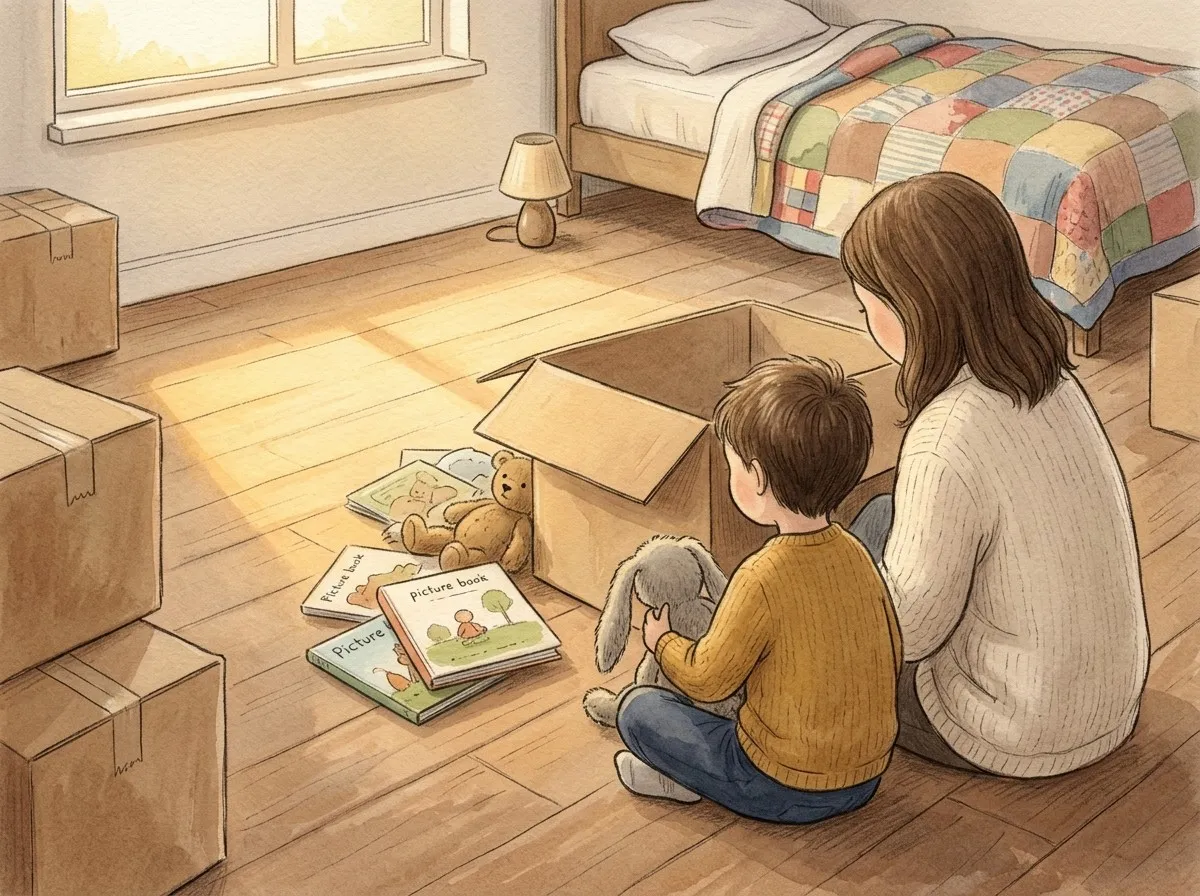
Moving house is a big, unsettling leap for a small person. They often cannot say what worries them, but the right books to help a child settle into a new home can give those feelings a shape, a story and a way through.
What a Good Moving-House Book Actually Does
A good moving-house book gives a child three things.
- A safe space to feel wobbly without having to say so. The worry belongs to the character for a few pages, which many parents find makes it easier to talk about.
- A coping model. The main character packs a favourite toy last, chooses where the night light goes, learns the neighbour's name.
- A reframe. Home is shown as people, not place: the bedtime song, the same shampoo, the way Dad says goodnight.
The strongest thing to look for is a child main character who faces the move directly. A passive observer watching a house get packed teaches little. A child who packs the last box, says the hard goodbye and finds one thing that helps gets a script for their own first weeks. What matters is not how much the book explains about removal lorries or new schools. It is whether the child in the story is the one feeling, deciding and acting.
That is where a personalised moving-house story can help. The child's own name and face can appear in the illustrations, so the main character is not a stranger, it is their child. Browse the moving home story ideas to see which situation fits.
Which Stories Land Best at Different Ages
Ages 2–4
At this stage a move is felt through objects and routines, not explained ideas. A board book or a very short picture book with sturdy pages works best. Look for stories that follow a familiar bedtime rhythm in a new room: finding the night light, hearing the same lullaby, recognising the soft toy on a different pillow. Many parents find that a book with only a sentence or two per page holds a two-year-old’s attention and turns an unfamiliar bedroom into something cosy. Scenes of a child choosing which coat peg is theirs or seeing their own cup in a new kitchen matter far more than a plot.
Ages 5–7
Five-to-seven-year-olds are ready for a picture book that stretches to around thirty-two pages. The stories that land best are gentle neighbourhood adventures: a first walk to the corner shop, a chat with a child next door, a lost toy that gets found by a friendly face two streets away. The child in the story should be the one finding small wins, like learning the name of the cat that sits on the new front step, rather than being told everything is fine. Friendship and exploration feel real here, and many parents find that a book with a simple map or a repeatable phrase gives a child a bit of script for their own first week.
Ages 8–10
Older children often grapple with the bigger idea of leaving something behind while still carrying it forward. This is when a longer illustrated story or an early chapter book works beautifully. Look for memory objects: a jar of loose buttons that connects to a grandmother’s old house, a torch under the pillow that once lit a different ceiling, a mystery about something left in a box nobody packed. The story can move between the old home and the new, threading a line between the two. A format with short chapters and occasional pictures feels grown-up without being overwhelming.
Beyond the Book: Three Things to Do While You Read
The book matters, but what you do around its edges can matter just as much. A story about moving house works hardest when it is a conversation starter, not a quiet lecture a child receives from the sofa. Here are three small things to try while you read together.
Pause and ask about the new room. When the character steps into an unfamiliar bedroom, stop. Ask a gentle question: "What would you put on that shelf?" or "Where do you think your night light should go?" Keep it light. If the answer is "I don't know" or a shrug, move on. The point is not to extract a feeling but to leave a door open. Many parents find that a question asked during a story feels less like an interrogation than one asked at the dinner table.
Compare a story moment to real life. If the character packs a favourite toy last, mention it: "That is what we did with your rabbit, wasn't it?" If they hear a strange sound in the new house, you might say, "Remember the boiler clicking on our first night?" One small connection is plenty. You are showing your child that their experience has company in the pages, not ticking off a list of similarities.
Make the book itself a ritual. Choose one story and read it on the first night in the new house, then again a week later. The familiar words become a thread between the two evenings. A personalised book, with your child's own name and face already woven into the illustrations, can feel especially anchoring for this. Some families keep that single book on the bedside table through the first fortnight, a quiet signal that some things stay put even when everything else shifts.
When the Story Has Your Child's Name in It
A picture book about moving house is good. A picture book in which your child sees their own name and face on the page, standing in the doorway of the very new bedroom they are trying to make sense of, can be something closer to a compass. CubFable lets you place your child at the centre of a moving-home story, not as a listener but as the character who opens the box, finds the quilt, and discovers that the new house already holds something of theirs.
Two story ideas built for this moment are The Quilt That Waited (for ages five to eight) and The Box Nobody Packed (for ages six to nine). In the first, a child unpacks a familiar quilt and follows its threads into a sense of belonging. In the second, the mystery of a box that appeared in the new house without anyone packing it leads to a gentle, reassuring discovery. Each begins the same way: with you choosing the story idea, typing your child’s name, and uploading a photo so the illustrator can draw a lookalike character.
Before any illustration is drawn, the full text appears on screen for you to read and approve. You can request changes at that stage, so the story matches your child’s world. The finished book is printed, bound and posted to you. If you cannot wait, you can also open the book on screen the moment it is generated.
Browse the moving-home story ideas to see which age and theme fits your situation, and for a deeper look at why this approach works, read our piece on personalised moving home stories.
Helping Older Children Feel in Charge of the Move
By eight, nine or ten, a child often needs less hand-holding and more of a job. They want to feel useful, not just comforted. A move strips away familiar landmarks, but it also hands them a blank map, and the right book can make that map feel like theirs to draw.
Look for stories where the main character actively shapes the new situation rather than simply adjusting to it. A mystery that unearths a family secret in the attic of the new house can turn a strange creaking floorboard into a clue. A neighbourhood adventure where a child maps every shortcut, odd letterbox and hiding spot gives your own child permission to do the same. Some parents find that an ordinary blank notebook and a few coloured pens turn a child into the author of their own moving story, complete with invented neighbours and a diagram of the perfect bedroom.
Try these two simple activities alongside whatever you read.
- Sketch the new bedroom. Hand over a sheet of A4 and a pencil, ask your child to draw the room as it is, then add three things they wish were in it. The drawing shifts the focus from what is missing to what is possible.
- Write a diary entry as the main character. After a chapter, suggest jotting down three lines in the character’s voice: what they noticed, what worried them, what they want to explore next. It creates a safe, sideways way to voice feelings without having to own them aloud.
A child who sketches, maps and writes her way into a new house is quietly building the story she will tell herself about this place for years.
Frequently asked questions
What are the best books to help a child settle into a new home?
The best books are age-matched stories with a child main character who feels wobbly, packs something familiar and finds one small win in the new house. For ages two to four choose sturdy board books about familiar routines. For ages five to seven pick neighbourhood picture books. For ages eight to ten choose short illustrated chapter books with a memory object or mystery.
How do I use a moving-house book to help my child talk about worries?
Pause when the character enters an unfamiliar new room and ask a light question, such as what your child would put on the shelf. Keep it low pressure, and if she shrugs, simply move on. One small question during a story often opens a door that a direct chat at the dinner table does not.
Can a personalised moving-home book help a child settle?
Yes. A personalised moving-home book places your child's own name and face in the story, so the main character is not a stranger. This can make the move feel safer and give your child a familiar script for the first few weeks in the new house.
Make one for your own little hero
Pick a story idea, add your child, and we print and post the finished book.
Browse story ideasKeep reading
A Story with Their Own Name: Personalised Books for Children Starting Nursery School
A personalised book for children starting nursery school puts your child's own name and face on every page, creating a quiet rehearsal for the first day.
Books to Help a Child Move to a New House: Stories That Meet Your Child Where They Are
The best books for moving house meet your child exactly where they are, giving feelings a name and gently nudging the wobble forward.
Adventure Books for Children Who Love Pirates: How to Pick a Proper Treasure
A practical guide to choosing adventure books for children who love pirates, with age-by-age tips, gift pairings and a way to put your child in the story.