The Adoption Story Book That Holds Your Child’s Name and Face
A personalised adoption story book for child puts their name and face on every page, turning a general adoption story into a keepsake that proves they belong.
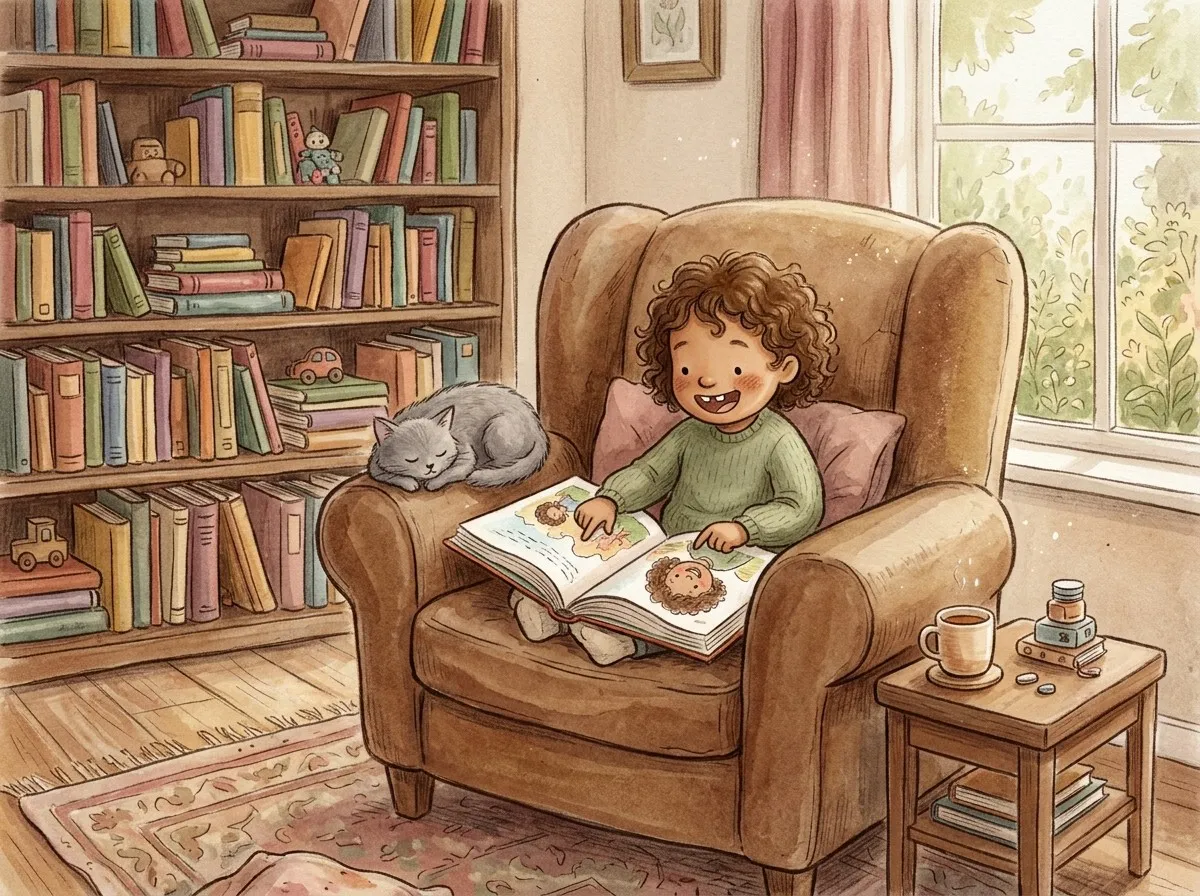
A book about adoption can still feel like someone else’s story. A personalised adoption story book for child changes that, but only if the child is truly at its centre.
Why an Adoption Story Deserves a Single, Specific Child at Its Centre
Adopted children often meet adoption as a general idea before they meet it as their own story. A kind stranger in a picture book can be comforting, but it does not name their birthday, their school run, their favourite cuddly toy, or the particular moment they joined their family. What many children need is not another character to watch. They need to see their own name on the page and their own face looking back from the illustration.
That is the difference a personalised book can make. At CubFable, you enter your child’s name and details, and you can upload a photo so the illustrations look like them. Your child is not dropped into a ready-made adoption plot. The story grows around one named, pictured hero, and you approve the text before any drawing begins. This means the story can reflect the way your family actually talks about adoption, with the words you use at home.
A personalised story also says something quieter. It says, “You are not a placeholder. You are the person this story was waiting for.” For a child building a sense of belonging, that is exactly where a keepsake should begin. You can browse the adoption story ideas to find a starting point, then shape it around the child you know.
What Makes a Story Feel True, Not Just Instructional
Some adoption books arrive wrapped in good intentions and end up feeling like a gentle lecture. The plot revolves around explaining where the child came from, as if the child were a puzzle to solve. The birthday, the pirate ship, the dragon egg, the missing mittens all wait patiently while the lesson takes centre stage. That kind of story has its place, but it rarely becomes a favourite.
The stories children ask for again and again are the ones where they simply get on with living. A child who happens to be adopted searches for a lost pearl in Captain Coral and the Missing Pearl, not because adoption is relevant to the quest but because the adventure belongs to them. Another bakes a cake that only they can make, or discovers a quiet torch-lit secret under the pillow, or joins a neighbourhood build with two flags flying. Adoption is present as a fact of their life, not as the problem the plot exists to fix.
What many parents find is that children recognise themselves more fully in stories like The Basket of Borrowed Sunshine or The Quilt That Waited. These are tales of family warmth, everyday magic, and small acts of courage that mirror a child's actual days. The warmth comes from the details: the name of the dog, the colour of the front door, the way Dad hums when he stirs the porridge. Adoption belongs to the background, just as it does in a real home. The child is too busy being the hero to be the subject of a lesson.
When you choose a CubFable story, you are not selecting a parable. You are handing a child a world where they already belong, fully and without explanation.
The Details That Turn a Book Into Proof
A child who has joined their family through adoption often carries an unspoken question: "Is this really mine?" A storybook that answers that question does not do it with a paragraph about belonging. It does it with a thousand tiny, concrete proofs scattered across the pages.
The most powerful of these is the face. When you upload your child's photo at CubFable, the illustrations do not show a generic brown-eyed girl or a boy with roughly similar hair. They show your child. That gap-toothed grin, that familiar tilt of the head, that exact shade of skin. Many parents tell us their child runs a finger over the illustrated face and says, "That's me." For an adopted child, seeing themselves drawn into a family scene, not pasted in as an afterthought, quietly confirms what words alone cannot.
The people around them matter just as much. A sibling with the same unruly curls. A mother whose skin tone matches her own, or pointedly does not, depending on how your family has framed that conversation. A father wearing the same jumper he wore last Saturday. These are not stock characters. They are the child's actual people, and their presence says, "This story belongs to us, not to some other family."
Then there are the small anchors: the red front door, the cat that sleeps on the radiator, the way Gran always keeps biscuits in a tin marked TEA. A CubFable story can hold these details exactly where a child expects to find them. For a child still building a sense of home, recognising their own windowsill, their own breakfast table, their own bedtime ritual inside a printed book feels like quiet proof that their place in this family is not borrowed. It is recorded. It is real.
You can browse adoption story ideas that start with a child who looks like yours and build outward from there. The details that make a book a keepsake are the ones only you can supply.
Reading It Together When the Story Runs Deeper Than the Words
A personalised adoption story book for child changes what a difficult question feels like. Instead of starting with "We need to talk," you can start with a page: "Look, that is you. There is your name."
Let the child lead. Some children will point to their illustrated face and say it again and again. Others will ignore the adoption thread and talk only about the dog. Both are fine. The book holds the family facts, but it does not demand a serious conversation on page one.
Many parents find the name is what makes the talk feel safe. A child who sees their own name inside the story is not being handed a general explanation of adoption. They are being shown that this particular story belongs to them. That makes it easier for a five year old to ask, "Was I in Mum's tummy?" or for a seven year old to ask why their earliest photos start somewhere else. The question is not abstract. It is about the child in the book, who is clearly them.
For grandparents, reading together can be a gentle way to say, "You arrived and we became yours." The story carries the history, and you can pause wherever the child needs to. Arrival, belonging and family history become part of the same cosy ritual.
A Book You Shape Before It Reaches Your Child
The process at CubFable turns you into the quiet co-author of your child’s story, without asking you to write a single line. It begins with a choice: you pick a story idea that fits your child’s age and the kind of adventure they would love, whether that is a bedtime world for a two-year-old or a proper quest for a nine-year-old. You can browse the adoption story ideas or explore the full catalogue, then enter your child’s name and the details that make family life yours: a pet’s name, a favourite colour, the tree outside the window.
Next comes the photograph. You upload a clear picture of your child, and the illustrators use it to draw a character who really looks like them. The hair, the smile, the way they hold their head — all of it is studied.
What makes this different from an off-the-shelf book is the pause built into the middle. Before any illustration is drawn, CubFable shows you the full story text for approval. You can read every sentence, check that the family structure feels right, and adjust anything that does not match your child’s actual world. Parents raising an adopted child often fine-tune a phrase about arrival or a description of a parent so the book reflects their family’s language, not a generic script. Once you are happy, the artwork begins — and the child who arrives on every page is yours.
Finding a Story That Fits Right Now and for Years to Come
A personalised adoption story book for child does not have to announce itself as an adoption story on the cover. At six, a child might care far more about a broken rocket thruster than about how their family came together. That is fine. Rocket Rescue on Planet Blue (ages 5 to 7) turns them into the space engineer who saves the day, while the thoughtful Box Nobody Packed (ages 6 to 9) traces a quiet mystery about arrival and belonging that an older child can sit with.
Browsing by age helps you find a story that holds your child now. A three-year-old will stick with you for about eight pages of garden creatures in The Little Door in the Hedge. A nine-year-old, though, might lose themselves in The Jar of Loose Buttons, a memory-filled fantasy that lasts across several sittings. The mood matters just as much as the birthday on the envelope. Some children need cosy; others need a quest.
When you browse the adoption story ideas, you will find that they are not walled off from adventure, fantasy or everyday family life. They are simply the same stories, written with room for a child whose family story started somewhere else. Choosing one that matches your child’s current passion, whether it is dragons, diggers or deep-sea mysteries, means the book gets pulled off the shelf long after the adoption conversation has become just another ordinary thing.
Frequently asked questions
How do I personalise an adoption story book for my child?
You start by choosing a story template at CubFable, then enter your child’s name, details like their pet’s name or favourite colour, and upload a photo. You review the full text and adjust it to match how your family talks about adoption before the artist begins, so the book feels entirely yours.
Can the book show my child’s actual face?
Yes. You upload a clear photograph of your child, and the illustrator draws a character that matches their hair, smile and skin tone. Children often recognise themselves immediately, pointing to the face and saying ‘That’s me,’ which makes the story feel like proof of belonging.
Is the adoption theme presented in a gentle way?
Adoption is woven into the background of the adventure rather than made the central lesson. The child simply goes on a quest, bakes a cake or finds a lost pearl, while adoption sits quietly among the details of family life, exactly as it does at home.
Make one for your own little hero
Pick a story idea, add your child, and we print and post the finished book.
Browse story ideasKeep reading
A Story with Their Own Name: Personalised Books for Children Starting Nursery School
A personalised book for children starting nursery school puts your child's own name and face on every page, creating a quiet rehearsal for the first day.
Adventure Books for Children Who Love Pirates: How to Pick a Proper Treasure
A practical guide to choosing adventure books for children who love pirates, with age-by-age tips, gift pairings and a way to put your child in the story.
Books to Help a Child Settle into a New Home, Age by Age
The right books to help a child settle into a new home give worry a shape, a story and a way through, age by age.