

How to choose a first day of school book for preschooler that actually helps
A good first day of school book for preschooler gives your child a small, safe version of the day to rehearse before the real bell rings.
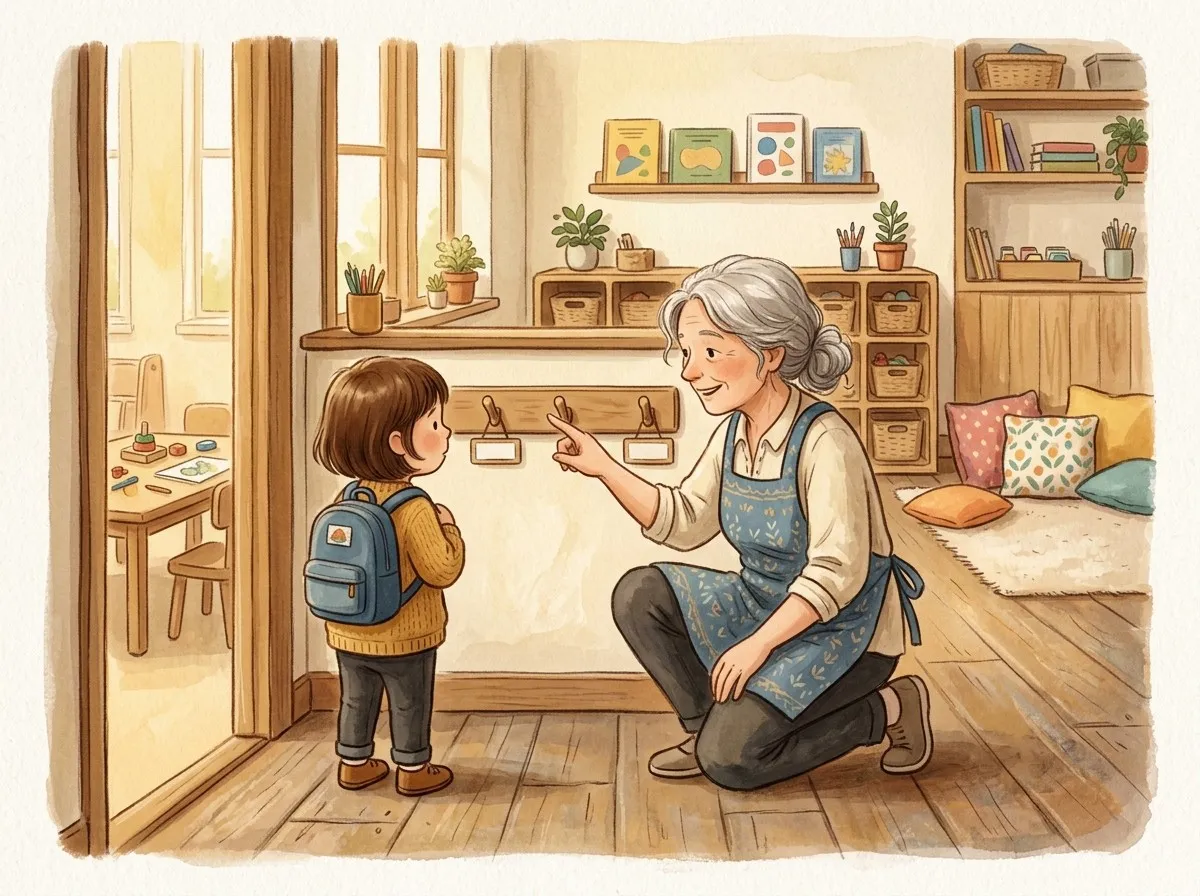
You want a first day of school book for preschooler that actually helps, not one that adds another worry to the pile. The best choices work because they mirror what your child already knows and feels.
What a preschooler really needs from a first day book
A preschooler does not need a big plot twist. They need familiar routines and a simple shape: home, goodbye, classroom, hello, home again. If the book includes small concrete details, a hook for a coat, a snack time, a carpet square, your child has something to point at and rehearse.
Keep an eye on length. Many three year olds will sit with about eight pages of pictures before their attention drifts, so a shorter book often does more work than a longer one. The emotional arc should be simple too: a little worry, a kind moment, a feeling of being okay. That is enough.
The main character matters. Your preschooler needs someone they can slip into, whether the child in the pictures shares their hair, their lunchbox or their habit of hiding behind your leg. Many parents find that a named child works well here, because the story feels like it belongs to their child from the first page. You do not need a hero who is brave every second. You need one who hesitates, tries, and comes home proud.
If you are choosing, look for those qualities before the illustrations or extras. The right book gives your child a small, safe version of the day to walk through before the real bell rings.
The moments that matter more than the words
The story is only half the book. The other half happens when you stop reading and let your child lead. Point at a picture of the coat peg. Ask, “Does that look like yours?” Wait. A three year old may just touch the page. That’s enough.
Let them point out what looks fun. “That snack table has bananas. You love bananas.” Let them show you what seems scary. A big door, a crowded hall, a toilet that looks different. Naming it takes the sting out. You don’t need to fix it. You just need to notice it together.
Relate the page to their own new school. “See how the teacher bends down? Your teacher does that too.” If the book shows a goodbye at the gate, pause there. “That’s like when I give you your big hug and wave.” The conversation around the book is as important as the story itself. Many parents find those few minutes of talk do more than the words printed on the page.
If the book you choose is personalised, the connection deepens. With CubFable, you upload a photo and the illustrations look like your child. Suddenly the child inside the classroom is recognisably them: same hair, same favourite trainers, same small smile. “That’s me!” becomes the starting point for a long, pointing conversation about what happens at school. That kind of back-and-forth turns a story into a dress rehearsal.
For more ways to ease the transition, read our guide on how to help a child start school.
When a book becomes their own first day story
Among the many choices for a first day of school book for preschooler, a personalised story sits a little differently. It hands your child the main role. CubFable is one option where the child appears by name and face, not just a placeholder. The illustrations are drawn from a photo you upload, so the small person walking through the school gate is recognisably yours: same hair, same favourite cardigan, same cautious smile.
Two story ideas that fit a preschool first day are The Peg That Knew Your Name and The Second-Newest Kid, both written for ages 4 to 6. One follows a coat peg that only feels settled when a familiar name hangs beside it. The other walks through the quiet moments of arriving in a classroom where everyone else already knows the routine. Neither story asks for instant bravery; both make room for the wobbles.
The process is simple. You choose a story idea, enter your child’s name and a few details, and upload a photograph. The story text is shown to you for approval before any illustration is drawn. Once you say yes, the printed book is bound and posted. If your child cannot wait for the parcel, you can read the book on screen right away, the moment it is generated.
browse the first day of school story ideas to see the full range.
Little routines that make the book work even harder
A first day of school book works hardest when it is tied to a handful of small, concrete actions. None require a grand outing. They simply give your child a bridge between the pages and the real place.
Walk past the school gate one quiet evening before term starts. Point: “That’s your school, just like the one in your story.” Then carry on to the park or the ice-cream shop. The gate stops being a big unknown and starts being part of the neighbourhood.
Draw a rough classroom map together on the back of an envelope. Mark the story corner, the sink, the toilets. Your child might guess where their coat peg will be. Write their name beside it. If you know the teacher’s name, use it casually: “Mrs. Byrne will be at the door, like the teacher who smiles in your book.”
A book read in the same chair, at the same soft time each day, becomes a ritual. That repeated setting wraps the story in safety. Most parents start the book about three weeks before the first day, reading it twice a week so it feels like old news. Then they pull it out again the night before school, when the jitters are real, and read it one more time. Even a personalised CubFable book, where your child sees their own face in the classroom illustrations, settles deeper when it is read from that same cosy corner.
For more ideas to help the first day go smoothly, visit our article on how to help a child start school.
What to do when the first day still brings tears
Crying on the first morning does not mean the book failed. It means your child did something hard, and tears are an ordinary part of that. Many parents find the book's real work begins after the goodbye.
The book is not a magic wand. It is a touchstone your child can return to once the school day ends. That evening, you might find them pulling it from the shelf. They are not asking for more reassurance about tomorrow; they want to make sense of today. They turn to the peg page and say, “That’s my peg,” stitching the morning onto a story they trust.
Now you have a shared language for feelings. A phrase like “a wobbly start” from the story becomes how your family talks about a hard morning without calling it a failure. The character who felt small in the new classroom gives your child a way to say “I felt like that too” without having to find the words alone.
If you chose a personalised story like The Peg That Knew Your Name or The Second-Newest Kid, your child sees their own face in those moments. You might say, “Remember how your peg felt lonely at first, but then someone new arrived?” and your child nods because they lived it alongside a character who looks exactly like them.
The value of a first day book is not preventing every tear. It is giving you a story that knows how to talk about them after the tears have dried.
Frequently asked questions
What should I look for in a first day of school book for preschooler?
Look for a short, concrete story that follows a simple sequence: home, goodbye, classroom, hello, home again. The main character should hesitate, try, and end up okay rather than being brave every second. Small details like a coat peg, snack table or carpet square give your child something to point at and rehearse.
When should we start reading a first day of school book to a preschooler?
Start about three weeks before the first day, reading it twice a week so it feels familiar rather than overwhelming. Read it in the same chair at the same soft time, then bring it out again the night before school. The repetition turns the story into old news, which makes the real morning feel less sharp.
Does a personalised first day of school book work better for preschoolers?
It can, because the child sees their own name and face inside the classroom story. That recognition often turns 'That's me' into a longer conversation about what will happen at school. The book becomes a dress rehearsal rather than a general story, which is useful when a child needs concrete, personal reassurance.
Make one for your own little hero
Pick a story idea, add your child, and we print and post the finished book.
Browse story ideasKeep reading

Personalised books for 5 year old girls that she'll read until the spine goes soft
A story where the heroine has her name, her face and her own quiet courage is the one she reaches for night after night, long after the plastic toys are forgotten.
Personalised Books for 5 Year Old Boys: A Guide to Stories That Get Read Twice
To find personalised books for 5 year old boys that become bedtime favourites, look for stories that give him a real mission, with his own name and face inside.
Personalised books for 1 year olds: what actually holds a baby’s gaze
A one-year-old needs faces, rhythm and familiar things more than plot, and the right personalised book can grow with them past the first candle.