

A Gift for the Child Who Has Everything: Give Them Themselves
When the toy box is already full, the best gift for a child who has everything is something made about them, not another thing.
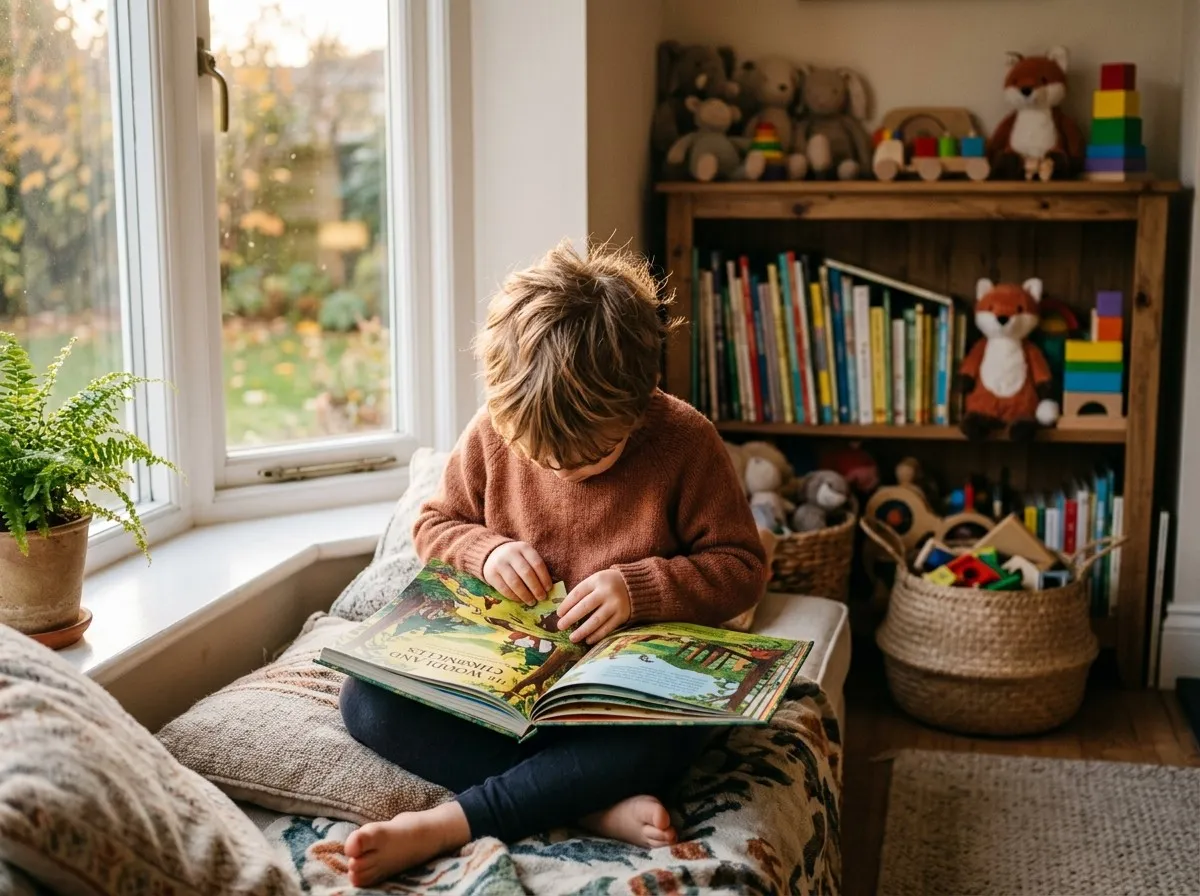
If you are hunting for a gift for a child who has everything, the honest answer is not another thing at all. It is something made about them: a story where they are the hero, an afternoon set aside just for them, a letter they can read again in ten years. Children with full toy boxes are not short of stuff. They are short of moments and attention that are entirely theirs, and that is the gap worth filling.
Why the toy box stops working
Once a child has a good bike, a full shelf of books and a box of the last five birthdays' worth of toys, a new plastic thing barely registers. It gets a quick look, then joins the pile. This is not ingratitude, it is simply how novelty works: children (like the rest of us) adapt fast to objects and slowly to being noticed. A gift that says "I thought about you specifically" lands differently than one that says "this was in the shop."
That is the real brief behind "what do you get the child who has everything": stop competing on volume and start competing on attention. You cannot out-buy a full toy box, but you can out-notice it.
Gifts built from time, not shelves
Some of the best options here cost more in planning than in money.
- A day chosen entirely around their current obsession, whether that is dinosaurs, trains or football, with no siblings' preferences involved.
- A skill lesson they have been asking for: swimming, an instrument, climbing, baking with a grown-up who has patience for mess.
- A "yes day" where, within reason, they get to choose the plan.
- A standing tradition, like a monthly cinema trip or a Saturday morning walk that is just the two of you.
None of these need wrapping paper to matter. They work because the child is the point of the plan, not an afterthought to it.
Gifts that put them in the story
A different route is to give a child a story that could not belong to anyone else: their name on the cover, their likeness in the pictures, choices that shape how it goes. It turns a passive present into something they recognise themselves inside, which is a different feeling entirely from unwrapping a toy that a thousand other children also got this year.
This is the gap CubFable was built for. You pick a theme and a reading level, add a photo, and the child becomes the illustrated hero of their own personalised story, delivered as a proper hardcover book. A story like Rocket Rescue on Planet Blue works well for a child who wants to be the one solving the puzzle and saving the day, while something like The Keeper of Birthdays suits a child who is turning a year older and might enjoy a story that takes that milestone seriously. It is one option among many on this list, but it solves the "has everything" problem directly: nobody else has this exact book, because nobody else is this exact child.
Part of why this works comes down to something simple. As we wrote in why children love hearing their own name in stories, a child's own name pulls their attention in a way generic characters never quite manage. Put that alongside a matching illustration of them, and a book stops being "a nice one" and becomes theirs.
Gifts that keep growing with them
Some gifts are not meant to be finished on the day. A jar you both add notes to across the year, a growth chart drawn straight onto the wall, a box for keeping ticket stubs and drawings, a letter written now and opened on a birthday five years off. These work precisely because they are unfinished: the child gets to watch them fill up, which a toy on a shelf cannot offer.
A keepsake box works especially well for a child who already owns plenty, because you are not adding another object to compete with the rest, you are giving them somewhere to put the things that already matter to them.
Matching the gift to the child, not the occasion
The "has everything" problem usually shows up around birthdays and Christmas, when everyone is buying at once and the toy box fills up fastest. Rather than trying to out-spend that pile, it helps to ask what this particular child actually lacks, which is rarely an object.
A few honest questions to run through:
- Do they want more one-to-one time with a parent or grandparent, rather than more things?
- Do they love being the centre of a story, or would they rather be handed a project to do alone?
- Is there a skill they keep mentioning but nobody has booked yet?
- Would they get more from something to keep adding to than something finished on day one?
Answering these usually points straight past the toy aisle. For more ideas along these lines, our guide to the best personalised gifts for kids goes through other ways to make a gift feel specific to one child rather than generic to any child.
Making the day still feel like a gift
None of this means skipping wrapping paper and candles. A letter, a voucher for a day out, or a hardcover book with their face on the cover can still be wrapped, opened and made a fuss of on the morning itself. The shift is in what is inside the wrapping: not one more toy competing for shelf space, but something that could only ever be for them.
That is really the whole answer to the question. A child who has everything does not need you to find the one toy they are missing. They need proof that someone sat down and thought about them specifically, and there are plenty of ways to give that, from a day out to a story with their name on the spine.
A short list, if you still want something to wrap
If the family is asking what to buy and you would rather hand over an idea than explain a philosophy, these tend to work across most ages:
- A personalised story book with the child as the hero, chosen to match something they are already into.
- A ticket or voucher for a specific outing, booked and dated, rather than a generic gift card.
- A subscription to something they use up and look forward to, like a monthly craft box or a magazine.
- A skill class booked as a course rather than a one-off, so it becomes part of their week.
- A keepsake box, jar or journal that starts empty and is meant to fill up over months.
None of these need to be expensive to land well. What they have in common is that each one was chosen with a particular child in mind, not pulled off a shelf because it fits any child roughly the same age.
Letting the child help you decide
It is worth asking the child directly, in a low-key way, rather than guessing. Not "what do you want for your birthday", which usually gets an answer shaped by whatever advert they saw last, but something softer: what they have been doing with their free time, who they have been talking about, what game they keep replaying in their head. Children tend to reveal what they actually want through what they keep circling back to, more than through a wish list.
A grandparent or aunt who sees the child less often can also ask the parents directly what the child has been "going on about" lately. That single question usually does more work than browsing an entire gift guide, this one included.
Frequently asked questions
What is a good gift for a child who has too many toys already?
Look past objects towards time and attention: a day built around their current interest, a lesson in something they keep asking about, or a personalised story that puts them at the centre. These do not add to the toy pile, and they tend to be remembered longer than another plastic set.
Are experience gifts better than toys for children who have everything?
Often, yes, because an experience is shaped around that one child rather than mass produced. A trip, a class or a tradition gives them undivided attention, which is usually the scarce thing once the toy box is already full, rather than another object to find room for.
How do personalised books work as gifts for kids?
A personalised book uses a child's name, likeness and sometimes their choices to make them the hero of the story, so the same title reads differently for every child who receives it. It suits a child who already has plenty of generic books but not one that is actually about them.
What can I give instead of a toy for a birthday?
Consider a keepsake box to fill over time, a letter to open later, a skill lesson, a day chosen around their interests, or a personalised story book. Any of these signal the gift was chosen for this specific child, which tends to matter more than the object itself.
Make one for your own little hero
Pick a story idea, add your child, and we print and post the finished book.
Browse story ideasKeep reading
Personalised books for 5 year old girls that she'll read until the spine goes soft
A story where the heroine has her name, her face and her own quiet courage is the one she reaches for night after night, long after the plastic toys are forgotten.
Personalised Books for 5 Year Old Boys: A Guide to Stories That Get Read Twice
To find personalised books for 5 year old boys that become bedtime favourites, look for stories that give him a real mission, with his own name and face inside.
How Personalised Books for the First Day of School Calm the Wobbles
A child who sees their own face, name and favourite toy inside a first-day story is far more likely to talk about worries, because the book has already said it.