

A Moving House Book That Stays the Same When Everything Else Shifts
A personalised moving house book for toddler that turns a big move into a small adventure your child can hold onto.
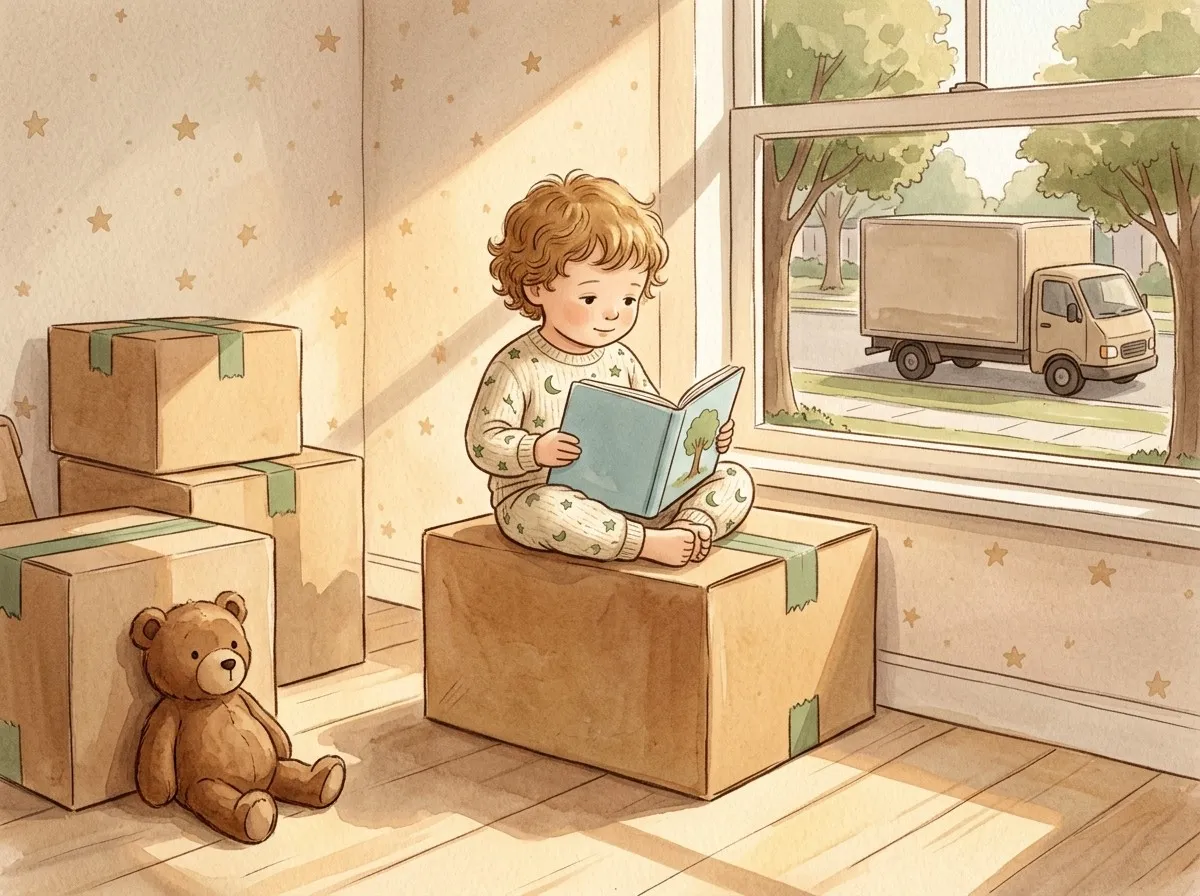
When you’re looking for a moving house book for toddler, you’re not simply after a tale about removal vans. You’re holding a small anchor for someone whose entire world is about to tilt.
Why moving house feels huge when you’re two feet tall
To a toddler, home isn’t a postcode. It’s the particular creak of the third stair, the rectangle of morning light that lands on the kitchen floor, the corner where the blue cup always sits. None of that is coming with you.
When the sofa is lifted onto a lorry and the bed ends up in a different room with a different view, a small child experiences loss they can’t yet name. Familiar routines vanish overnight: the bath-time echo in the old bathroom, the patch of wall they stared at while falling asleep, the neighbour’s cat that visited the windowsill at exactly four o’clock. These tiny anchors held their day together. Their sudden absence can feel disorienting, even frightening.
A storybook can’t pack boxes, but it can give a toddler something steady to hold onto. Many parents find that a book in which a child sees their own wobble of uncertainty reflected becomes a quiet companion through the chaos. When the main character walks into an unfamiliar room, notices the missing things, and slowly finds new corners to love, it offers a script for what the toddler is living. Better still, when the illustrations show a face that looks like theirs and the text uses their own name, the story stops being a lesson and starts feeling like a friend. You can browse story ideas for moving home that do exactly that, building a gentle narrative around the child you’re hoping to reassure.
What a good moving house book actually says
A good moving house book doesn’t just announce that a family moved. It slows right down and lingers on the details a toddler would notice. You want pages that show packing boxes stacked in the hall, a child choosing which toys travel in the car, and a real moment of saying goodbye to a bedroom wall. A page where the child pats a packed box and whispers goodbye to the garden fence tells a toddler that their own feelings belong in the story. Those concrete images give a small child language for the strange thing they’re living through.
The best stories don’t pretend the move is pure adventure. They make space for the wobble: the too-quiet first night, the kitchen that smells different, the garden gate that squeaks in the wrong key. But they never leave the child there. Look for a clear turn where something small and good begins to take root: a new view from a new window, a neighbour’s wave, a familiar blanket laid out in an unfamiliar room. The comfort should feel earned, not rushed.
In a personalised book like those CubFable makes, you can place your child right inside that arc. You enter their name, upload a photo so the illustrations look like them, and you see the story text before any picture is drawn. That way the goodbye to the old bedroom feels like their goodbye, and the new comfort feels like it was written just for them. Many parents find that when a child watches their own face navigate the move on the page, the story becomes a bridge they cross together.
When the book arrives matters more than you think
A moving house book for toddler isn’t furniture you unpack on the other side. It works best when it has a week or two to become familiar before the boxes take over. You tuck it into the bedtime rotation while the old bedroom still feels complete. The child learns its rhythm, its pictures, the particular weight of it in their lap. By the time the lorry appears, that story is no longer a stranger. It’s a portable patch of the known.
Let the book travel with the child
Pack the book in the bag your toddler will carry themselves. Read it in the car, on a grandparent’s sofa, on a hotel bed between the two houses. Let them hold it while you explain that the blue cup will come in a box and the morning light will find a new floor. Many parents find the book becomes a transitional object, a bit like a favourite blanket: it smells like the old house, it sounds like your voice, and it stays the same when everything else shifts.
If you’re making a personalised story, the child’s attachment often starts even sooner. You can show them the story on screen as soon as you have approved the text, so the character with their name and their face is already a companion before the printed copy arrives. Later, when you unpack in the new room, that same story sits on the new shelf, unchanged. A child who can reach for a story that helped them say goodbye often finds it easier to say hello to the view from a different window.
The extra twist: when the child sees their own name on the cover
A generic moving house book can explain what a removal van is. A personalised one does something quieter and more practical: it places the child inside the story from the first page, before they have to open a single packing box.
On CubFable, you start by picking a moving home story idea that fits your child’s age. You enter their name, choose the details that matter (hair colour, a favourite toy, the colour of the front door they waved goodbye to), and upload a photo so the illustrations echo their real face. Then the text arrives for your approval. You read it on screen, as many times as you like, before a single line is drawn. Nothing goes to print until you are happy that the goodbye to the garden fence and the first glimpse of the new bedroom feel true to your own child.
What happens next is often the part parents write to us about. The child opens the finished book and recognises themselves. It is not a cartoon character who happens to share their name. It is them. Their freckles, their wispy fringe, their slightly crooked smile. Many parents find that this recognition changes how a child carries the story. The book stops being a pleasant tale about moving and becomes their familiar anchor. The child who was nervous about the new kitchen can point to their illustrated self and say, “That’s me. I’m going to be okay there.”
Because the story can be read on screen the moment you approve the text, a child can meet their printed self while the old house still feels whole. You might page through it together on the sofa, naming the boxes and the feelings, before the real boxes arrive. Then, when the printed edition lands in the new room, the character with your child’s name and face has already walked through the whole journey once. The story ideas for moving (like The Box Nobody Packed or The Quilt That Waited) are written to acknowledge the wobble and find the small, steady comforts. With a photo and a name woven through every page, those comforts belong directly to your child. Browse the moving home story ideas to find the one that matches the move your family is about to make.
Beyond the book: small rituals that make a new house home
A story is powerful, but it works best when it sits inside a few small, repeated rituals. These don't need to be elaborate. In fact, the simplest ones often stick hardest.
Let the child unpack their favourite toy first. Not the box of toys. The one. The threadbare rabbit or the digger with the missing wheel. Place it on their new bed before you open a single other bag. That one familiar object tells a toddler what a dozen reassuring sentences cannot: something you love already belongs here.
Keep the same bedtime story. The one you are reading now. Same voice, same pages, same pause before the last line. A new window, a different streetlamp glow, but the words do not change. Many parents find that holding this one story steady for the first fortnight gives the evening a shape the child can predict, even when the shadows on the ceiling are unfamiliar.
Recreate a small sound or smell from the old house. If the old kitchen radio played a particular station at breakfast, stream it in the new one. If the hallway had a lavender candle, light the same one beside the new coat hooks. A child's sense of home lives partly in the nose and the ears. These tiny sensory anchors cost nothing and take no time, but they whisper to a young brain that the world has not been entirely rearranged.
The book you are reading together is part of this wider settling in effort. It is not a standalone fix. It is one thread in a small net of familiar things, a net you weave quietly while the kettle boils and the boxes sit half empty.
Frequently asked questions
When is the best time to introduce a moving house book to a toddler?
Ideally, give the book a week or two before the move. Reading it regularly while the old home still feels whole helps the child build a familiar rhythm. Pack it in their own bag, not a removal box, so the story stays close and becomes a steady companion through the disruption.
Make one for your own little hero
Pick a story idea, add your child, and we print and post the finished book.
Browse story ideasKeep reading
A Personalised Story That Makes Potty Training an Adventure
A personalised potty training book turns your child into the hero of a gentle adventure, making the milestone feel like play instead of pressure.
Personalised Books for 2 Year Olds: How to Pick a Story They'll Actually Love
When a book feels like theirs and fits their world, it does not sit on a shelf but gets carried to the breakfast table and read until the spine softens.
How to choose a first day of school book for preschooler that actually helps
A good first day of school book for preschooler gives your child a small, safe version of the day to rehearse before the real bell rings.