
Reading Milestones by Age: The Signs You Can Actually See
From a two-year-old holding a book right-way-up to an eight-year-old tackling chapter books, shifts reveal how a child’s relationship with stories deepens.
You want to choose a book that matches where a child is right now. Reading milestones by age are less about sounding out words and more about small, visible shifts in how a child treats a story. For a two to four year old, that starts before letters make sense.
Before They Read a Single Word (Ages 2 to 4)
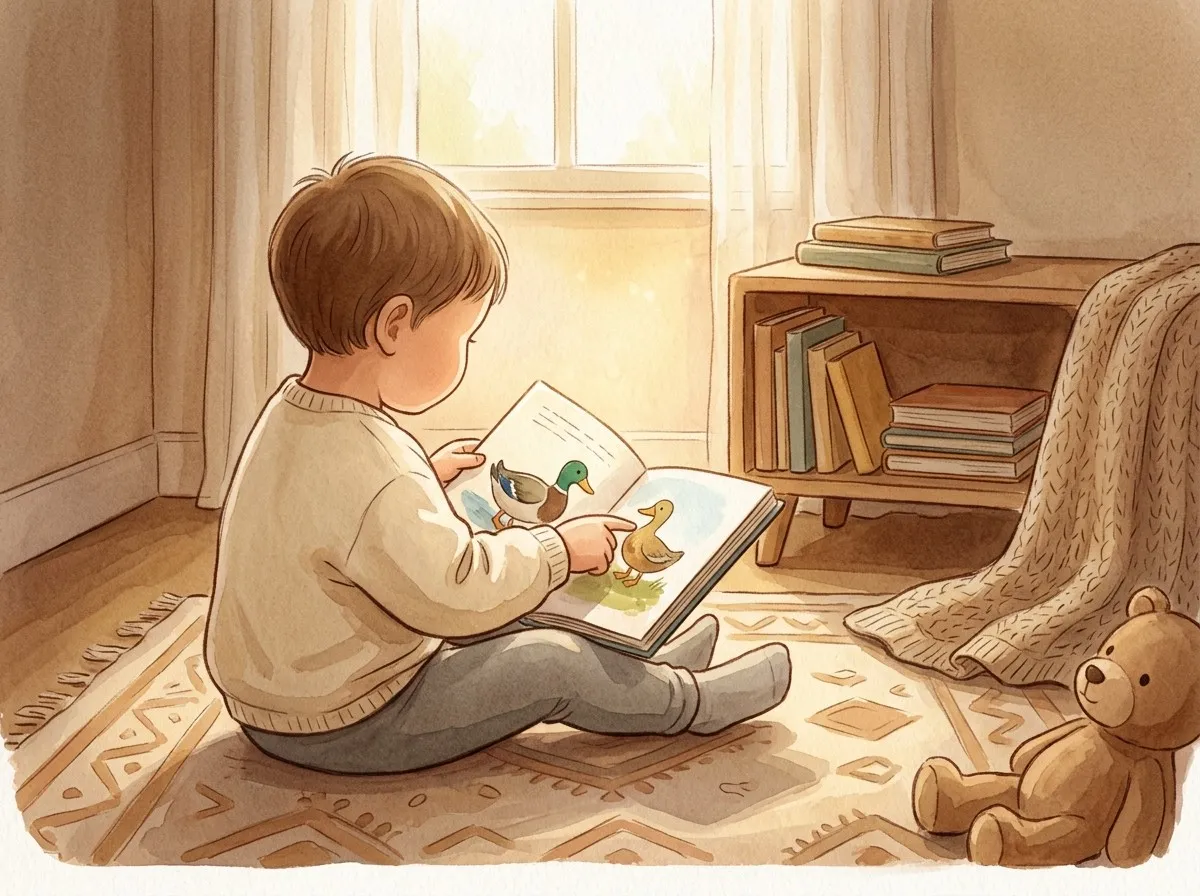
Before children read a single word, they are already reading in their own way. A two-year-old who holds a book the right way up is showing that books have a logic. A three-year-old who turns pages one at a time, not always in order, is learning how stories move. These are real milestones, not just cute habits.
Pointing at pictures counts too. When a child jabs at a digger or a duck and looks up at you, they are asking: are you seeing what I see? Answer with a word or a sound, and the exchange grows.
Recognising their own name in print often comes next. Many parents notice it on a birthday card, a coat peg or the cover of a favourite story. Completing familiar phrases is similar. Pause before the last word of a loved line and a toddler may fill it in. That is a child joining the story, not just repeating it.
At this stage, the goal is to make books feel like a safe, joyful habit. A child who snuggles in, chooses the same story again and feels in charge of the page is building the relationship that later reading depends on. Many parents find a personalised book helps here, because the child’s own name becomes one of the first pieces of print they recognise. For calm tales that suit this stage, browse the bedtime story ideas.
The Sound of Someone They Love (Ages 2 to 6)
Between two and six, a child’s listening comprehension races ahead of their ability to decode print. They can follow a plot, track three or four characters and hold their breath at a story’s turning point long before they can read the word “turn.” That gap is not a problem. It is an invitation. Every time you read aloud, you are filling their ears with words they will not be able to read independently for years, but already understand and enjoy.
Being read to builds vocabulary in the richest possible way. Words arrive embedded in a story, surrounded by emotional context, not isolated on a flash card. A four-year-old who hears “enormous” while studying a giant’s boots knows exactly what it means. Narrative understanding grows too. Children learn that stories have a shape: a beginning that hooks, a middle that twists, an ending that satisfies. That mental map is what later reading comprehension is built on.
Perhaps the most quietly powerful thing you can hand a child at this age is motivation. Learning to read is hard work. A child who already knows that books contain laughter, comfort and surprise is far more likely to push through the slog of phonics. Many parents find that hearing their own name inside a story sharpens that connection overnight. When the main character shares their name, it is not just a story anymore. It is their story. Attention locks in. The child leans closer.
Stories like The Biggest Little Helper or The Torch Under the Pillow land differently when the child in the book is unmistakably your child. That sense of being seen is fuel for the long journey toward independent reading.
Cracking the Code Isn't a Race (Ages 5 to 7)
Some children decode their first simple words at four. Many get there at six. A few take until seven, and that is still well within the wide, ordinary arc of reading development. The milestone that actually matters at this stage is not the date they read “cat” independently. It is their willingness to try.
You can hear the effort when a child starts blending sounds aloud. They see the letters c-a-t and say the sounds separately, then run them together into “cat”. It often sounds deliberate and a little wobbly. Other signs include:
- Pointing to a letter in a familiar book and asking what sound it makes.
- Guessing at a word by its first letter and the picture, even if the guess is wrong.
- Sounding out a word you say and trying to write it, letter by letter.
These are all clear signs the code is beginning to click. If your child is not doing any of this by the end of Year 1, that is not a signal to panic. It is a signal to keep reading aloud and to protect their confidence. Phonics can be taught in school, but the feeling that books belong to them is built at home. Play with sounds in the car: “What sound does ‘moon’ start with?” Never test, just invite. When a child feels the joy of shared stories, tackling the hard parts feels worthwhile.
If you are looking for ways to keep reading pressure-free and joyful, our guide to helping a child enjoy reading has practical ideas. A personalised story, where your child’s name appears inside a quest like Captain Coral and the Missing Pearl, can quietly remind them that books are about them, not about performance.
When Reading Feels Like Flying (Ages 7 to 10)
Somewhere between seven and ten, reading changes gear. The effort of decoding fades enough that the story takes over, and a child who once sounded out every word begins to read silently, turning pages for the pleasure of finding out what happens next. This is the shift from learning to read to reading to learn. School now expects children to gather facts from a page, follow plot twists across several chapters, and choose their own books from a shelf.
Chapter books become the new normal. A child who was proud to finish a six-page reader two years ago can now follow a mystery through a hundred pages, provided the book is not too hard. How do you know when a book is too hard? A quick check:
- They read a typical page and stumble on more than four or five words.
- They avoid picking up the book even when the topic interests them.
- They read aloud in a flat, choppy voice without any sense of phrasing.
If a book regularly triggers these signs, it is not the right one right now. The trick is to protect the feeling of competence while still stretching just enough. Many parents find that personalised books help a child stay with longer texts during this delicate transition. When your child appears as the main character in a story like The Clockmaker's Secret Map or The Library Between Worlds, the book is not just another title on the shelf. It is their adventure. That ownership can carry them through the extra pages without frustration, because they want to know what happens to themselves.
Choosing books independently is a milestone in its own right. Let a child browse adventure and fantasy stories and pick the one that makes their eyes widen. The best reading fuel is curiosity about a story that feels like it was written for them.
A Story With Their Face on Every Page
A CubFable book meets a child exactly where they are, and then walks forward with them. The same story idea, personalised, does different work at different ages.
A two‑year‑old opens Goodnight, Little Moon and sees their own illustrated face peeking from the covers. They point. They say their name. That tiny act of recognition is the beginning of everything: books are about me.
By five, that same child spots their name in print on the first page and points again, this time at the letters. Many parents find this is the moment a child connects the squiggles on the page to the person they know best. You approved the text before any illustration was drawn, so the name is spelled exactly right and sits where it matters most.
An eight‑year‑old takes a longer adventure, something like Codebreakers of Copper City, and reads it aloud to a younger sibling or to you. The fluency is new. The pride is real. Because the story stars them, they push through a tricky paragraph rather than closing the book. The finished hardback arrives in the post, or you can read it on screen the moment it is generated.
Every tale starts the same way. You pick a story idea, upload a photo, enter the details only you know, and approve the words before a single illustration is created. The range spans everything from The Garden’s Tiny Parade for the littlest listeners to The Jar of Loose Buttons for children ready to wrestle with memory and meaning. You can browse the story ideas by theme or age and find the one that fits right now.
What Matters More Than the Calendar
Milestones are signposts, not deadlines. A child who starts sounding out words at four is not ahead. A seven-year-old who still wants you to read aloud is not behind. The calendar gives you a rough map, but the child in front of you is the real route.
What sticks is feeling known. A child who sees their own name, their own face, their own small worries inside a story learns that books are for them. That feeling matters more than reading at a particular age.
So match the book to the child you actually have. If they ask for the same bedtime story every night, give them that comfort. If a four-year-old is mad about diggers, The Very Busy Digger will hold them longer than a chart-perfect reader. Choose by appetite and attention, not by the number on the cover. A child who feels included in the story will reach for the next page, and the next.
Frequently asked questions
What are the earliest reading milestones for a two-year-old?
At two, a child might hold a book the right way up, point at pictures to share attention, and recognise their own name in print. They may fill in the last word of a familiar phrase. These signs show they understand how books work and are building a bond with stories, long before sounding out letters.
Is it normal for a six-year-old to still not read independently?
Yes, many children decode their first words between five and seven, but the range is wide. Look for willingness to try: sounding out c-a-t, guessing words from first letters and pictures, and enjoying being read to. If they feel confident and connected to stories, later reading skills will come more easily.
How can a personalised book help a child reach reading milestones?
Seeing their own name and face inside a story gives a child a powerful sense of ownership. For a toddler, it's one of the first printed words they recognise. For an older child, that identity as the main character keeps them turning pages even when decoding is hard, bridging the gap between listening and independent reading.
Make one for your own little hero
Pick a story idea, add your child, and we print and post the finished book.
Browse story ideasKeep reading
Personalised books for 5 year old girls that she'll read until the spine goes soft
A story where the heroine has her name, her face and her own quiet courage is the one she reaches for night after night, long after the plastic toys are forgotten.
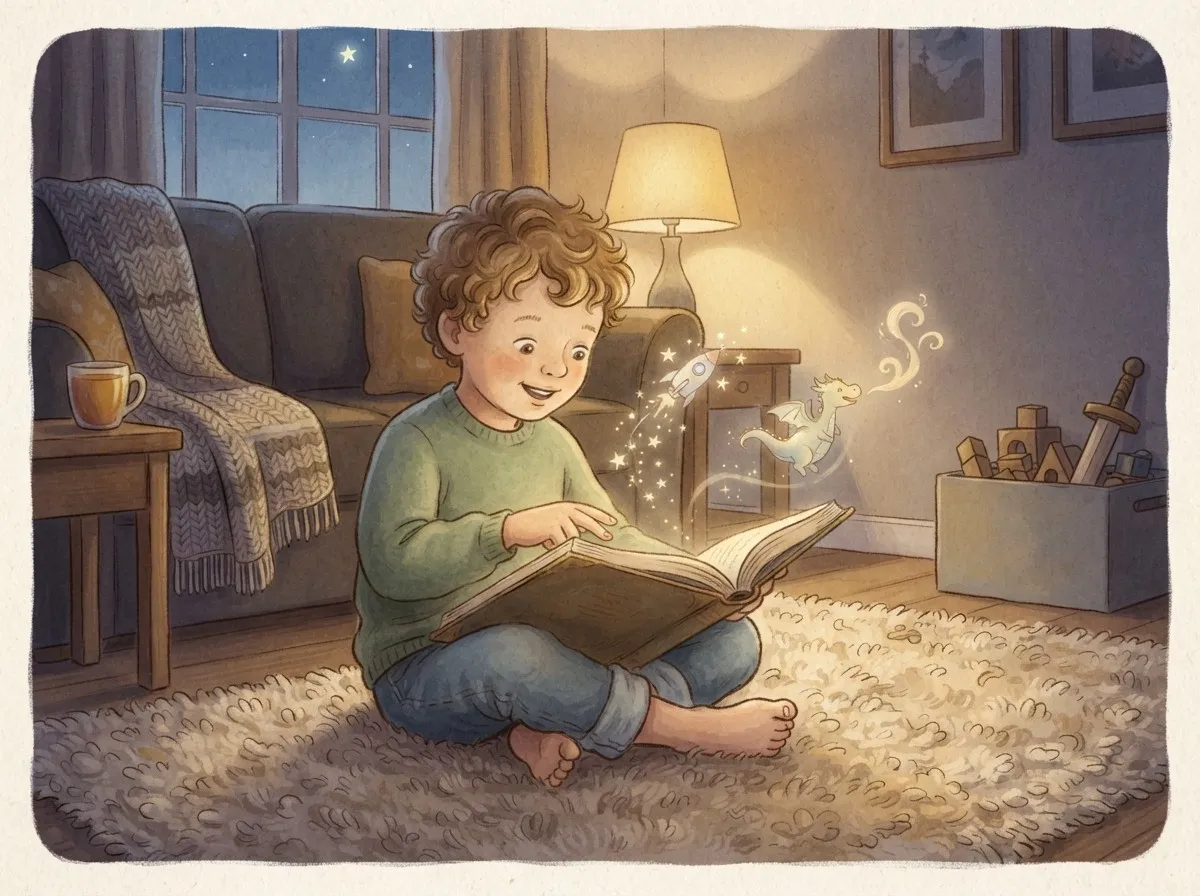
Personalised Books for 5 Year Old Boys: A Guide to Stories That Get Read Twice
To find personalised books for 5 year old boys that become bedtime favourites, look for stories that give him a real mission, with his own name and face inside.
Personalised books for 1 year olds: what actually holds a baby’s gaze
A one-year-old needs faces, rhythm and familiar things more than plot, and the right personalised book can grow with them past the first candle.