

The Best Books for Children About Moving to a New School
A steady, practical guide to picture books and chapter books that help children face a new school with a little less fear.
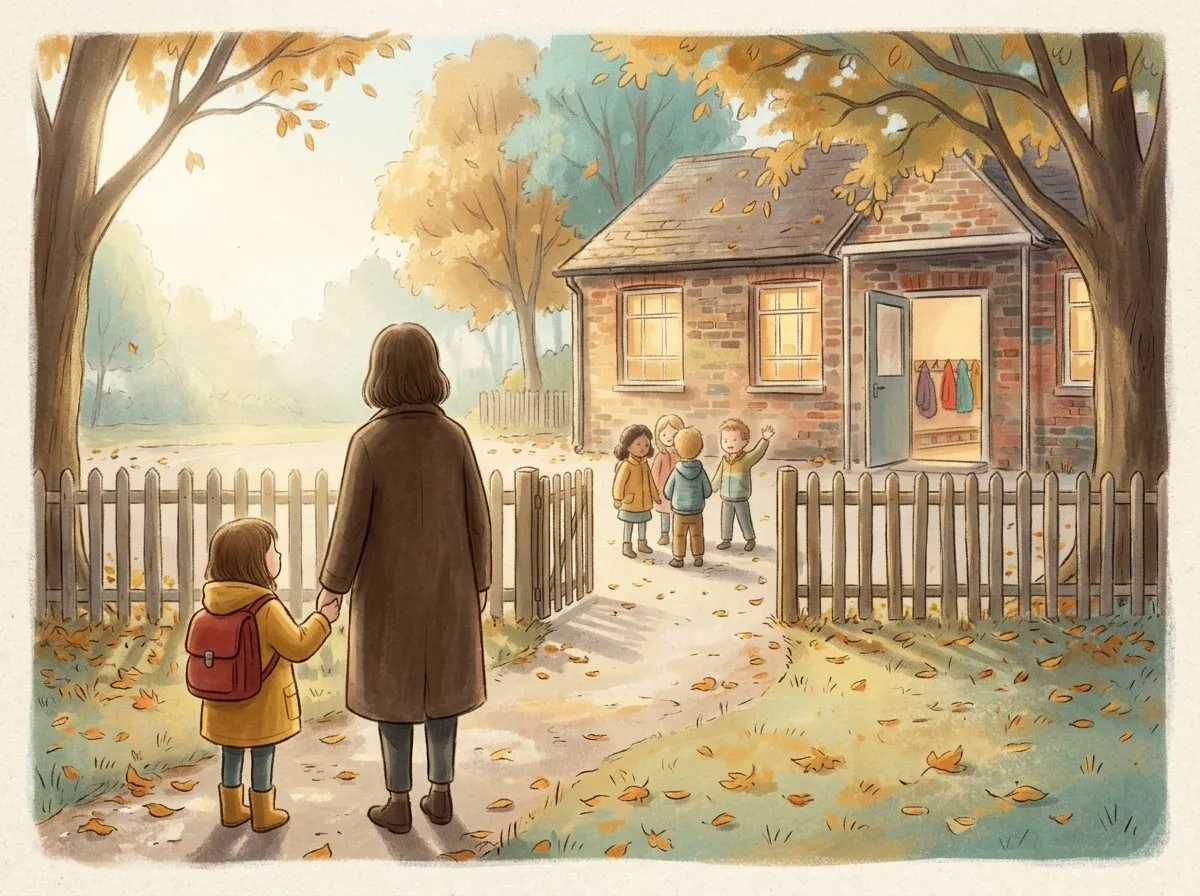
When your child is anxious about leaving the familiar, the right books for children about moving to a new school can feel like a steady hand on their shoulder. You have probably already talked about the new house, the new bedroom, the new walk to the corner shop. But often it is not the wallpaper that unsettles them. It is the thought of walking through a strange school gate and not knowing anyone.
Why a new school feels bigger than a new house
Moving house pulls the rug from under a child’s physical world. Their bed is in the wrong corner, the stairs creak differently and the light switch is on the wrong side of the door. These things matter. But they are tangible and, with time, they become normal.
A new school, on the other hand, picks up a child’s whole social identity and shakes it. Friendships, which took years to build, suddenly live on the other end of a video call. The lunchtime routine, the bench where they sat, the teacher who knew how they learn: all gone. A ten-year-old worries about who to sit beside in the dining hall. A five-year-old worries about being the only one who cannot do up their new coat. Even a little one starting nursery feels the shift in their sense of competence, because they have to prove themselves all over again to a room full of strangers.
That is why a story aimed at this specific worry does something a general moving-home book often misses. It puts the emotional weight where the child actually feels it. When a book shows a character surviving that first bewildering day, finding a coat peg, getting a smile from another child, it gives your child a blueprint they can hold onto. It tells them: you will not be the odd one out forever. And when that character looks like them, with their own name printed on every page, it becomes more than a story. It becomes a rehearsal. Many parents find that browse the first-day-of-school story ideas helps them pick a tale that matches their child’s exact age and worry, so the book turns up on their lap already knowing what they need to hear.
What a good school-transition book actually does (and what to skip)
A book that genuinely eases a school move does three small, precise things. First, it names the specific worry instead of wrapping it in cotton wool. A four-year-old needs to hear “I don’t know where the toilets are” or “nobody played with me”, not just a fuzzy promise that school is fun. Second, it walks your child through a full first day or a whole first week, so the rhythm of arrival, coat peg, register, lunch and pick-up becomes familiar ground. Third, and most important, it includes a wobble. A story in which the character sails through without a moment of doubt feels fake to a child who is already anxious. The best books show a shaky start, a small embarrassment or a lonely five minutes, and then let the character find their footing. That arc teaches a child that uncertainty is part of the process, not a sign they are failing.
What to skip on the bookshop shelf is just as clear. Avoid books that talk about a new school only in terms of bright colours, kind teachers and “you’ll love it”. Those leave no room for the feelings your child actually has. Steer past animal-school stories where the hedgehog remembers his pencil case and everything is fine by page three. And be wary of any book that treats the first day as a single hurdle to clear; transition is rarely a one-day event.
Some families find that a personalised version of this arc, with the child’s own name and face drawn into the wobble and the recovery, makes the story feel like a real plan rather than a distant example. You can read about how that works for children starting school.
Picture books that get it right for the under-sevens
For a two-year-old starting nursery, the right book is almost entirely visual. They need to see the room they will walk into: the low tables, the row of coat pegs, the basket of soft toys in the corner. A story built around a single concrete detail, like The Peg That Knew Your Name, makes the unfamiliar feel claimable. One peg, one spot that belongs to them, can anchor a whole morning. Keep it short. A two-year-old will sit still for about eight pages, and every one of them should show something they can point at and recognise later.
At three and four, the playground becomes the emotional centre. It is loud, unpredictable and full of children who already seem to know each other. A book that works at this age zooms in on that noise. It shows the character standing at the edge, watching, unsure how to join. Then it offers the smallest possible bridge: another child holding out a spade, a shared glance at a ladybird on the fence, one friendly face in the lunch queue. The Second-Newest Kid does this well for the four-to-six bracket, letting your child practise that first approach from the safety of your lap.
Why the pictures do half the work
The illustrations in a school-transition book are not decoration. They are the child’s first tour of an unknown building. A good artist shows the exact layout: where the bags hang, what the toilets look like, how far the hall is from the classroom. When your child can study those spreads at home, slowly, with no time pressure, the real room feels less like a ambush when they arrive. And if the drawn child in the book shares their hair colour, their glasses, their favourite red shoes, the identification is instant. It stops being a story about a generic rabbit or mouse. It becomes a story about them, already managing, already finding their feet.
Chapter books and quiet adventures for eight to ten year olds
Many eight to ten year olds have outgrown the direct “new kid” picture book. What they often respond to instead is a story where the new school is the opening situation, not the whole plot. The child arrives in an unfamiliar place, misreads the timetable, spends a lonely five minutes at lunch, and then something larger pulls them in: a locked clock case, a signal from another part of the city, a library that opens onto the wrong corridor.
Look for books where the move sets up the ache and the mystery or adventure does the quiet healing. One or two companions are usually enough. The transition happens in the background while your child follows the quest at a safe distance, recognising the wobble without having it pointed at directly. The best of these stories also give the character one small, private skill that matters later, so the new school becomes the place where they discover their place rather than the thing they simply survive.
CubFable story ideas like The Clockmaker's Secret Map or Codebreakers of Copper City put your child at the centre of that shape. Browse the adventure and fantasy story ideas to find a world that would hold their attention.
When the book is about your child, not just a character like them
An illustrated rabbit with a new rucksack can do a lot of the emotional work. But some children need something closer to home: a story where the child standing at the school gate really does look like them, share their name, and carry their exact worries.
That is what CubFable sets out to create. You begin by browsing the story ideas and picking one that fits your child’s situation. For a school move, many parents gravitate towards The Second-Newest Kid, written for four to six year olds, or The Box Nobody Packed, a quiet home-to-school tale for children aged six to nine. After you choose, you enter your child’s name and a few everyday details: the colour of their hair, whether they wear glasses, perhaps the name of a friend or a teacher they already know.
The step that changes everything is the photograph. When you upload a clear picture of your child’s face, the illustrator uses it to draw them into every spread. The character in the book is unmistakably yours. Before any paint touches the page, you see the full story text and can ask for adjustments. Nothing is illustrated until you are happy with the words.
Once the story is generated, you can read it on screen straight away. That can matter on a Sunday evening when the new school feels especially close. The printed, bound copy follows later, ready for the quieter days that come after.
Reading it together so the story does its quietest work
The first time you open a book about moving to a new school, read it lightly. Let the words land without pointing at the parallels. Your child is mapping the story in their own way, and a pause that feels like waiting can feel like pressure.
On the second read, slow down at a spread that shows the classroom or playground. Try asking, “What do you think they’re noticing here?” Keep it genuinely open. If they shrug or stay quiet, turn the page. The question is an invitation, not a test.
By the third read, many children begin to talk about the character’s feelings as if they were their own. That is the moment to let them lead completely. Follow the tangents. A throwaway remark about lunch tables often holds the real worry, not the classroom itself. The book turns into a shared vocabulary, not a lesson. And often the quietest work happens after you have closed it, when they bring it up again at bedtime or in the car without any prompting at all.
Frequently asked questions
What age do books about moving to a new school work for?
Books about moving to a new school help from around age two through ten. For two to four year olds, choose visual picture books that tour the classroom and show a small wobble. For five to seven year olds, look for a full first day arc. For eight to ten year olds, chapter books with a new school setting and a quiet adventure often work best.
Should I read the book before the first day or after?
You can do both, but reading in the week before a move is most useful. It lets your child rehearse arrival, lunch and pick-up before they face them. After the first day, return to the same pages and let your child talk about what matched or felt different. Keep it relaxed, not a lesson.
What makes a personalised book different from a normal starting school book?
Personalised books put your child’s own name and face in the middle of the new-school wobble and recovery. Instead of watching a character, they see themselves managing the moment. For many children this feels like a plan rather than a general promise, especially if the story includes their teacher’s name or a familiar routine.
Make one for your own little hero
Pick a story idea, add your child, and we print and post the finished book.
Browse story ideasKeep reading
Books to Help a Child Move to a New House: Stories That Meet Your Child Where They Are
The best books for moving house meet your child exactly where they are, giving feelings a name and gently nudging the wobble forward.
Personalised books for children starting swimming lessons: start with the worry, not the wet hair
Personalised books for children starting swimming lessons turn first-pool nerves into quiet confidence by letting a child see their own familiar face.
Books to Help a Child Settle into a New Home, Age by Age
The right books to help a child settle into a new home give worry a shape, a story and a way through, age by age.