

Books to Help a Child Move to a New House: Stories That Meet Your Child Where They Are
The best books for moving house meet your child exactly where they are, giving feelings a name and gently nudging the wobble forward.
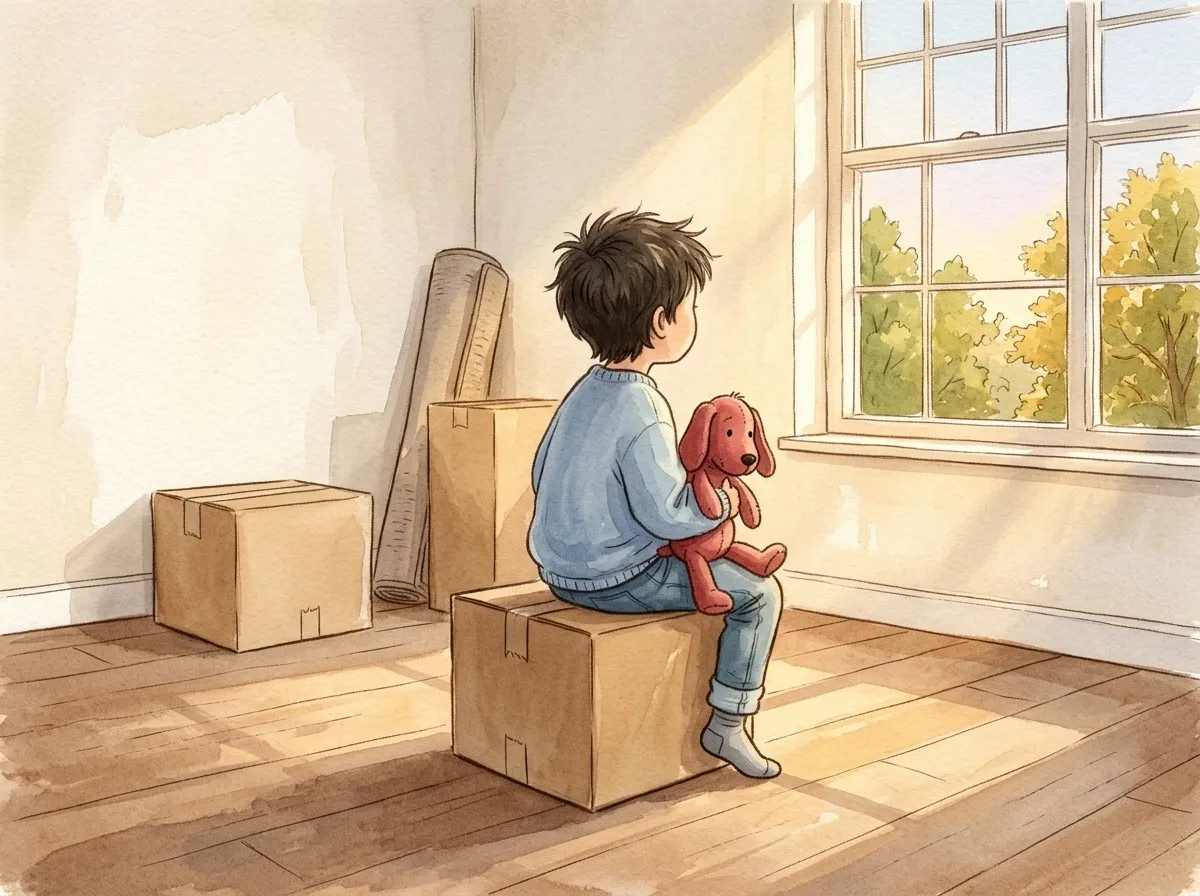
Moving house is a tangle of feelings, and for a child those feelings often show up in ways that catch you off guard. The best books to help a child move to a new house are the ones that start precisely where your child is standing, not where you wish they were.
Start where your child is, not where you wish they were
A good moving story does not paper over the worry. It sits alongside it. If you open a book and find a child who misses the old bedroom, feels wobbly on the first night, or discovers one tiny thing that slowly makes the new house brighter, you have probably found the right companion. A story that quietly says “it is all right to be sad and a bit excited at the same time” gives your child permission to name what they feel, rather than stuff the feelings out of sight.
That permission matters. A three year old might not have the words for “I miss the way the landing light fell across my cot”, but they will recognise the character who tucks a familiar stone under the pillow in a strange room. A seven year old might roll their eyes at a relentlessly cheerful tale, yet lean in close when the main character finds one box nobody packed and decides to leave it exactly as it is for a while. The trick is to look for stories where the child’s inner world leads and the plot follows.
Before you buy, flip through the pages yourself. If every double‑page spread is a smile, put it back. The true comfort comes from a book that mirrors the wobble and then, gently, nudges it forward. Many parents find that a story with the child’s own name and face woven into that wobble works even more powerfully, because there is no gap between the feeling on the page and the feeling in the room. If you would like to see a moving‑day tale where your own child appears on every spread, browse the moving home story ideas.
Picture books for little ones, chapter books for big kids
A two- to four-year-old will sit still for about eight pages, so a picture book that offers a single sensory moment on each spread works best. A new garden, a different smell, a familiar cuddly toy in an unfamiliar room. When your child sees their own face in a story like Milo Finds His Mittens or The Garden’s Tiny Parade, the new house starts to feel less like a stranger’s place and more like their next chapter.
Five- to seven-year-olds can hold a simple narrative with a clear problem. They need a proper storyline: finding the courage to ring a neighbour’s bell, making a friend on the new street, discovering one small thing that feels like it belongs to them. A story idea such as The Other End of the String hands your child the lead role in that gentle struggle, turning a worry into a bridge.
By eight to ten, chapter books where the child drives the plot become the most powerful tool. A mystery in the attic, a project in the back garden, a box nobody packed—these children want to be the ones solving, building and uncovering. The Box Nobody Packed gives an older child exactly that: a problem to work through at their own pace, with their name on every chapter. Keep an eye on word count and emotional intensity; a longer book can still be a hug, but it must never tip into overwhelm. For every age, a book where your child sees themselves as the protagonist can nudge that wobble forward, page by page.
Let the book start the conversation, not finish it
A moving‑day book is not a bedtime sermon. It works best when you pause mid‑page and let your child do the talking. After a spread where the character walks into an empty room, try: “What would you put in your new room first?” If the picture shows a wobble—a character clutching a soother, a little one looking back at the old house—you might ask, “Do you ever feel like that when you think about the new house?”
Children often lay their own worries onto a story without being prompted to name them. When a four‑year‑old says “the dragon misses his old cave,” he is probably telling you something about himself. Listen more than you explain. A gentle “I wonder what would help him” is usually more useful than a tidy reassurance. In a story where the main character finds one box nobody packed, pause and ask, “What would you leave inside it?”
Keep the book on a low shelf during the first week, within easy reach. Many parents find that a child who ignored the book during the day pulls it out at bedtime and works through the same pages again. That repetition is not a delay; it is how they process a change this big, slowly turning the unfamiliar into something they can hold. Some children will retell the story to a soft toy, or add their own page about the new garden.
When the main character looks exactly like your child
You can go a step further with a personalised moving home story. When a child sees their own name in the text and their own face in the illustrations, the unfamiliar house on the page suddenly feels more like theirs.
CubFable lets you pick a moving‑themed story idea, enter your child’s name and details, and upload a photo so the artwork looks like them. Two stories built around a move are The Box Nobody Packed, for children aged six to nine, and The Quilt That Waited, suited to five‑ to eight‑year‑olds. In the first, your child becomes the one puzzling over what got left behind—and what that might mean. In the second, the discovery of a familiar quilt in a strange room becomes the thread that pulls the old house into the new one.
You see every word of the story before any illustration is drawn, so you can check the tone feels right for your child. The finished hardcover is printed, bound and posted to you. Because the book can also be read on screen as soon as it is generated, you have something to share during those in‑between days when the old house is disappearing and the new one is not quite home. A story starring your child does not magic the move finished, but it hands them a small, solid piece of it that already belongs to them.
What to do after the last page is turned
A book gives you a shared story you can take off the page and into the house. If the character builds a blanket fort, build one under the kitchen table that same afternoon. If there is a special box, let your child pack their own small box of keepsakes from the old home and decide where to open it in the new one. Keep the box in their room for a week before the lid comes off.
Walk the garden together and draw a map. Mark the gate, the tap, the patch where the bins stand. You do not need to be neat; the point is that your child is naming the new place out loud. Stick the finished map to the fridge and add a new landmark whenever they spot one.
Take a photograph of your child in each room and staple them into a slip of paper booklet. That is their own mini moving story, with the empty hallway and the window they have already claimed. Add a caption in their words if they want one, or let them draw the front cover.
These small actions turn an abstract storyline into real ownership. The child stops being a visitor and starts being the person who knows where the cereal bowl is and which window catches the morning sun.
Frequently asked questions
What types of books help a child cope with moving house?
Look for stories that acknowledge mixed feelings without forcing cheerfulness. Picture books with a single sensory moment on each spread suit toddlers, while five-to-seven-year-olds need a clear storyline about making friends or finding courage. Older children respond to chapter books where the child solves a puzzle or uncovers a mystery themselves.
How can I use a moving-day book to start a conversation with my child?
Pause on pages that show a wobble. Ask open questions like “What would you put in your new room first?” or “Do you ever feel like that?” Let your child project their own worries onto the character, and listen without jumping to reassure. Keep the book within reach so they can return to it independently.
Make one for your own little hero
Pick a story idea, add your child, and we print and post the finished book.
Browse story ideasKeep reading
The Best Books for Children About Moving to a New School
A steady, practical guide to picture books and chapter books that help children face a new school with a little less fear.
A Pet Care Story That Turns Your Child into a Gentle Little Carer
A personalised pet care story puts your child’s name and face into a gentle tale of feeding and kindness, turning story time into a lasting lesson.
When Your Child Is Afraid of the Dark, a Personalised Book Can Light the Way
A gentle bedtime story where a child sees their own face become the hero who tames the dark.