

When Your Child Is Afraid of the Dark, a Personalised Book Can Light the Way
A gentle bedtime story where a child sees their own face become the hero who tames the dark.
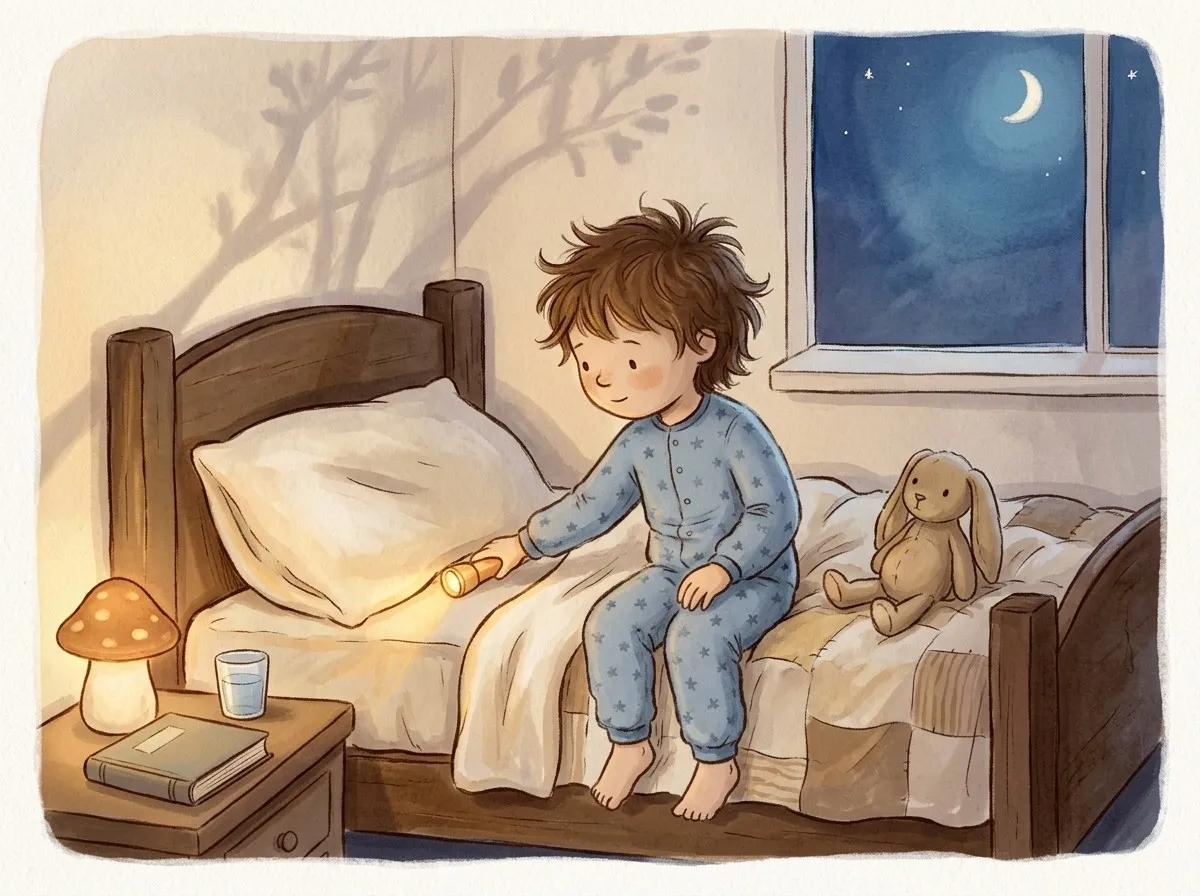
If your child suddenly needs twelve nightlights and an escort to the bathroom, you are not doing bedtime wrong. What you are seeing is a normal, healthy developmental stage, and personalised books for children afraid of the dark can be a gentle tool to help them name and tame that worry in their own time.
What fear of the dark looks like, age by age
The shape of the fear shifts as a child grows, and recognising your own child’s bedtime behaviour is the first step to helping them feel steady.
Toddlers (ages 2 to 3) rarely have the words for “I am afraid.” Instead, the dark becomes a battle of separation. A toddler who was sleeping soundly might start clinging, crying the moment you stand up, or inventing urgent needs for water, one more kiss, a specific soft toy that is somehow always downstairs. The dark is not yet a monster under the bed; it is the place where you disappear, and that is the thing they cannot bear.
From age 4 to 6, imagination ignites. Now the dark has a shape: a shadow that looks like a face, a cupboard that might hold something breathing, a window that feels watched. Bedtime becomes a negotiation about doors being left ajar, hall lights staying on, and the exact placement of a torch. A child in this age band will often ask the same questions every night, seeking the same reassuring answers like a lullaby they can predict, which is why a story that puts them at the centre of their own brave adventure can land so deeply. You can browse the story ideas for calm, cosy tales built around a familiar face.
Older children (ages 7 to 10) intellectualise the fear but feel it no less sharply. They might lie awake thinking about intruders, fires or losing a parent, and they rarely call it a fear of the dark. Instead you may see a new resistance to going to bed, a sudden interest in sleeping with a sibling, or a need for the family pet to stay on their floor all night. They need stories that match their growing sophistication and respect the complexity of how they feel.
Why a bedtime story becomes the safest place in the house
The book itself matters less than the ritual it creates. When you sit on the edge of a child’s bed and open the same story for the third night running, you are not just reading. You are building a small, predictable world where the grown-up stays put, the voice stays soft, and nothing unexpected happens. For a child whose bedroom has suddenly become a landscape of shadows and strange shapes, that predictability is the first anchor.
Shared attention does something quietly powerful. Your finger follows the words, their eyes follow the picture, and for those few minutes you are both looking at the same thing. The dark recedes to the edges. The story holds the centre, and you are in it together. Many parents find that a child who could not articulate what scared them at lights-out will, halfway through a familiar tale, begin to talk about the character’s feelings first. That small distance, the fact that it is the bunny or the astronaut who is nervous, makes the whole thing safe enough to approach.
That is where a personalised story earns its keep. When the child sees their own face on the page, standing in a bedroom that looks like theirs, the boundary between “character” and “me” blurs in exactly the right way. The story gives them language: I felt wobbly too, and then I tried what the story said. A tale like The Torch Under the Pillow places a simple object of comfort into the child’s own hands, on the page, before they ever reach for it in the dark.
The closeness does the rest. Your arm against theirs, the rhythm of your reading, the small negotiation about turning the next page: it all tells a child’s nervous system what words alone cannot. You are here. Nothing bad is happening. This is just night-time, and night-time is where the story lives. You might browse the cosy bedtime story ideas to find one that settles into your own evening rhythm like a familiar song.
When the hero of the story shares your child’s name and face
A generic story can soothe. A personalised one can shift how a child sees themselves. When the little figure on the page has your daughter’s brown curls, your son’s favourite dinosaur pyjamas, and the exact spelling of a name they have been learning to write, something clicks behind their eyes. It is not a story about bravery any more. It is a story about them.
For a fear as intimate as the dark, that matters enormously. A child who listens to a tale about a nameless hedgehog being brave may enjoy it and still feel alone when the lamp clicks off. The same child, having just read a story in which they walked through a dim hallway, found the light switch, and discovered that the shadow on the wall was only a coat on a peg, has a different resource to draw on. They have seen themselves cope. The memory is sensory: the weight of the book, your voice saying their name, the picture of their own calm face looking back at them.
The book becomes a talisman as much as a story. Many parents report that their child asks to keep it on the bedside table, not the shelf, sometimes with a hand resting on the cover. It is a portable reminder that the dark was managed once, in this very room, by this very person. Stories like The Torch Under the Pillow and Goodnight, Little Moon are built for exactly this: they name the child, they show a bedroom that looks familiar, and they lead the small protagonist through a sequence of small, manageable steps toward a cosy ending.
A child who hears “Leo took a slow breath and clicked the torch on” while looking at an illustration of their own face is not just being told what courage looks like. They are being shown that they already have it.
How CubFable builds a bedtime book that feels made just for them
You start by choosing a story idea from the collection. For a child settling into the dark, many parents reach for something like The Torch Under the Pillow, a calm bedtime tale built around a familiar comfort object. The plot is already mapped out, but it waits for your child to step into it.
Next, you enter a few simple details: the child’s first name, how it appears day to day, and the small characteristics that make them who they are. Hair colour, skin tone, favourite pyjamas. You can upload a photo, too. That snapshot guides the illustrator so that the little figure on every page genuinely resembles your child, not a generic cartoon.
Before any final art is drawn, the full story text appears on screen for you to read and approve. You see your child’s name threaded through the sentences. You check that the tone feels right, that the worries the character faces match your own child’s bedtime world. Only when you confirm it does the illustration begin.
The finished book is printed on proper paper, bound into a hardcover, and posted to you. In the meantime, you can read the same story on screen as soon as it is generated, which often comes in handy the night a child needs a little extra reassurance before the printed version arrives.
The whole process, available in eight languages, fits around your evening rather than demanding a new routine. You shape the details; the story does the rest.
Choosing a story that meets your child where they are tonight
Choosing among personalised books for children afraid of the dark is less about picking the bravest title and more about matching the story’s rhythm to your child’s current bedtime. If your child is two and just beginning to name shadows, a quest can be too much too soon. Goodnight, Little Moon is the gentlest entry point: short, rhythmic, and built around the familiar ritual of softly saying goodnight to the moon, the window, the blanket and teddy. For children between two and four, that repetition is the point.
A five-year-old often feels brave in daylight and wobbly when the light goes off. The Basket of Borrowed Sunshine suits that in-between age. It is a home story with a warm, cosy premise, offering a way to carry a little brightness into the dark. Many parents find that five-year-olds respond not to being told "it is only a shadow" but to a story that gives them something small and practical to do about it.
For a child of six or seven who wants a proper adventure, The Lantern in Whispering Wood stretches into a forest night without being harsh. The child carries a light, meets manageable moments of uncertainty and comes through with their face and name in the centre. It feels more like an adventure than a lesson.
You can browse the bedtime story ideas to see which age band and mood feels closest. A four-year-old may still want the lullaby cadence of something like The Lullaby in Your Pocket, while an eight-year-old may prefer a longer, more intricate story from the wider catalogue. Matching the story to tonight, not to the age you hope they will grow into, tends to work best.
Frequently asked questions
What age is suitable for a personalised book about the dark?
Personalised books for fear of the dark work for children aged two to ten. The key is matching the story’s rhythm to your child’s bedtime stage. For toddlers, a short, rhyming lullaby book works best. For older children, an adventure where they carry a light suits their growing confidence.
How does a personalised book help a child who is afraid of the dark?
Seeing their own name and face as the hero helps a child believe they can cope. The story gives them a memory of bravery they can recall when the light goes off. Shared reading also builds a calm, predictable ritual that makes the dark feel safer.
Can I preview the story before ordering?
Yes, CubFable lets you see the full story text with your child’s name on screen before any illustration is drawn. You can read it together that same evening, and you only confirm when you are happy with the tone and details.
Make one for your own little hero
Pick a story idea, add your child, and we print and post the finished book.
Browse story ideasKeep reading
Personalised books for children starting preschool: making the first goodbye survivable
A personalised book with your child's face turns the first preschool goodbye into a story they can point to, talk about, and return to.
Books to Help a Child Move to a New House: Stories That Meet Your Child Where They Are
The best books for moving house meet your child exactly where they are, giving feelings a name and gently nudging the wobble forward.
A Pet Care Story That Turns Your Child into a Gentle Little Carer
A personalised pet care story puts your child’s name and face into a gentle tale of feeding and kindness, turning story time into a lasting lesson.