

Why a Personalised Moving Home Story Helps Your Child Settle
A personalised moving home story can't magic away the upheaval, but it gives a child a way to see their own feelings on the page.
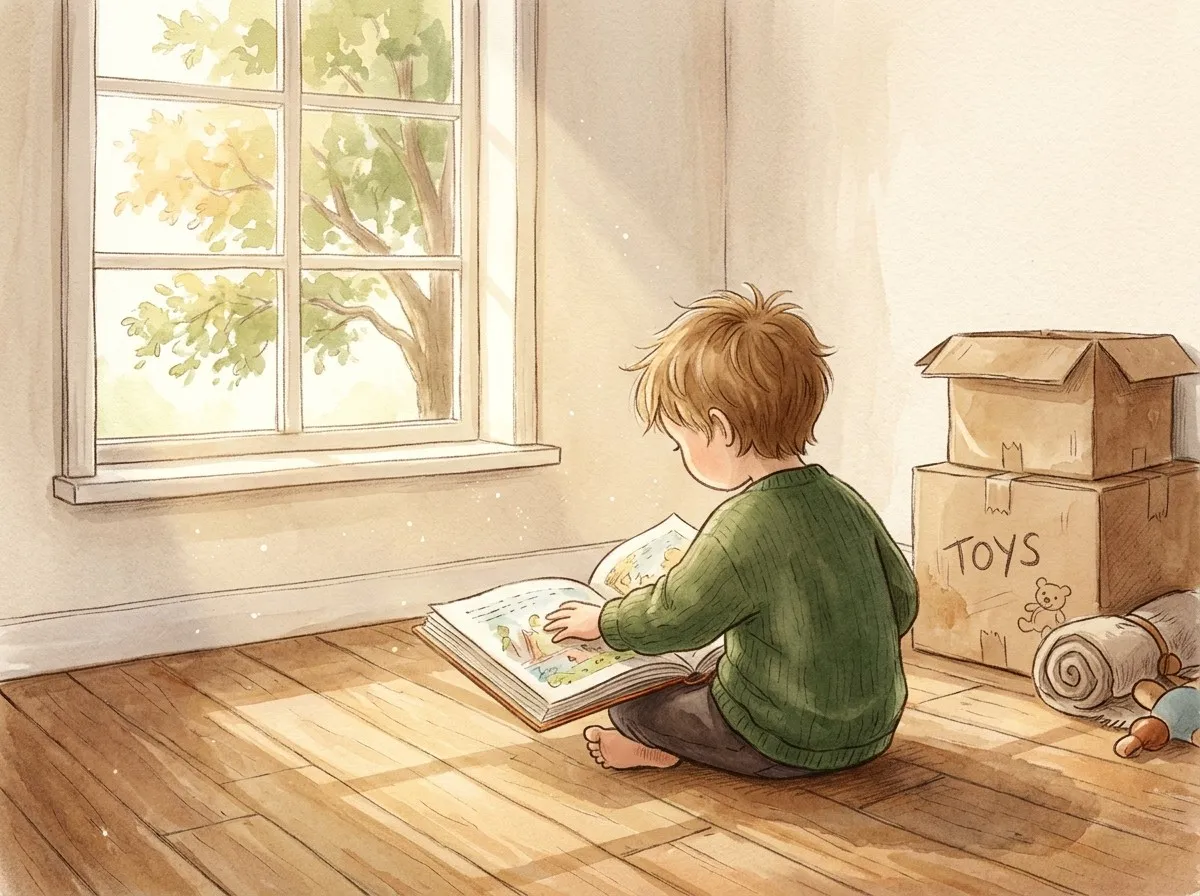
You’ve packed the last box, but your child is still asking when you’re going back to the old house. A personalised moving home story for a child can’t magic away the upheaval, but it gives them something nothing else can: a way to see their own feelings on the page.
Why moving house hits harder than you expect
Adults tick off removal vans and meter readings. A young child loses the only map they know. The corner where the tabby cat sat, the bump in the hallway floor, the particular squeak of the bathroom door: all of it is gone, and a child’s sense of safety is woven tightly into those tiny, repeatable details. Without them, even a sunny new bedroom can feel like falling.
Routines take a hit, too. The walk to the childminder, the post-school biscuit on Grandad’s sofa, the bedtime story nook that smelled of washing powder and quiet: these rituals are the scaffolding of a small person’s day. When a move knocks them down, many children stiffen or regress a little, not because they’re being difficult, but because the world has temporarily lost its shape.
A story that mirrors their own situation doesn’t rush in with a fix. Instead, it names the muddle and hands it back to the child in a form they can hold. A character who leaves a familiar garden gate and feels strange and cross, or one who finds their old torch under a pile of unopened boxes, gives a child language for the wobble inside them. They may not tell you outright that they miss the old spice rack Mum used to lift them up to touch. But they might point to a page and say, “That bit’s like me.”
Many parents find that reading a story where the child sees themselves, with their own name and their own curls or freckles, opens a door that logic and reassurance cannot. It says: your feelings belong here, in this new house, on this new sofa, and we can turn the page together.
What a story with their name changes
When a story carries your child’s own name, the new house stops being an abstract idea and becomes the setting for their next adventure. Instead of hearing about a boy or girl “like them,” they see themselves walking through the unfamiliar front door on the page. Their own curls, their own gap-toothed grin, their favourite dinosaur T-shirt appear in the illustrations, because you can upload a photo and the artwork follows your child’s details. The box-filled hallway suddenly feels less strange when the main character—unmistakably them—is the one exploring it.
Because the child is at the centre of the action, the story naturally follows their curiosity. They might open a cupboard and find a forgotten cuddly toy, or discover that their old night-light still casts the same friendly shape on the ceiling. This shift from “a house is happening to you” to “you are discovering this house” is small but powerful. Many parents find it sparks conversations that wouldn’t happen otherwise. A child who stayed silent about leaving their old bedroom might point to a page and say, “I have a torch like that, under my pillow.” Suddenly a door opens and you can talk about what they miss, what they hope for, and what they want to unpack first.
That sense of control matters. A personalised story hands the child a version of events they can turn back to again and again, at their own pace. The new house isn’t just a place they landed in; it’s a place where something important happened, with them as the main character. If you’re looking for a story that meets them exactly where they are, you can browse the moving home story ideas and choose a theme that fits your child’s age and temperament—from a cosy tale for a two-year-old to a mystery for an eight-year-old who needs a reason to stay curious about the next room.
The right story for the right age
A story that fits their stage is one they’ll return to. For a two-year-old, a shorter plot centred on familiar objects works best: a ten-page search for a lost soft toy or a favourite blanket, with gentle, repeating lines. Milo Finds His Mittens uses a simple “Is it here? No. Is it there? Yes!” pattern to make a new house feel orderly and safe. Many parents find this kind of object-focused story tucks the unfamiliar inside the familiar until the new place feels like home.
By five, children crave adventure and a sense of ownership. A twenty-page story like The Basket of Borrowed Sunshine lets them roam the new home collecting light, with their name scribbled on little notes tucked into the pages. The illustrations, which mirror their own photo, show them hanging their coat on a new peg or choosing which wall gets the jar of sunshine. That slight shift from visitor to resident matters, and the plot follows their decisions, turning “Mum and Dad’s new house” into “my new house.”
An eight-year-old often needs a mystery or a project. Stories such as The Jar of Loose Buttons run closer to twenty-four pages, with a trail of clues hidden in the garden shed, the attic or the kitchen drawer. The child isn’t just arriving—they’re unravelling a secret about the house itself. The pace is brisker, the vocabulary a notch sharper, and the ending hands them a small triumph that belongs to them alone. That shift from newcomer to detective gives a reluctant older child a reason to poke into every room.
You can browse the full moving home collection to find a story that meets your child right where they are.
A few pages you’ll both return to
A personalised moving home story doesn’t do its best work sitting on a shelf. It earns its place when you weave it into the unsettled early days, until the new house and the book feel like two parts of the same adventure.
Three simple ways to make the story part of settling in
- Read it in the new bedroom first, before anywhere else. On the first night, sit on the floor with the book and a torch, and let the story’s familiar rhythm fill the unfamiliar shadows. Many parents find a child who refused to sleep alone will curl up and listen, because the character with their own face is doing the same brave thing.
- Link a page to a real room. If the story mentions a torch under a pillow, find your child’s torch and tuck it in. If the character discovers a forgotten box in the attic, walk upstairs together and see what the previous owners left behind. The book becomes a map, and your child the explorer.
- Let the book travel on moving day. Because a CubFable story is available on screen the moment you approve the text, you can have it on your phone while the van is being loaded. A child clutching a tablet in the car can see themselves already inside the new house, turning an anxious journey into the next chapter.
Once the hardcover arrives, keep it in the bedroom they’re still getting used to. It will be the one book they reach for when they feel wobbly, because it tells their story, and they know how it ends: with them, at home.
How CubFable puts your child in the picture
CubFable’s moving-home collection meets children at the moment they need it most, with a set of stories built around the real feelings a move stirs up. For the child who watches boxes pile up and wonders what gets left behind, The Box Nobody Packed spins a quiet mystery out of a single forgotten cardboard box and the surprising answer tucked inside. For siblings squaring off over which room is whose, The Fort of Two Flags turns territory into teamwork, with a blanket fort that straddles both bedrooms and belongs to neither side alone. For the smallest movers, aged two to six, The Lullaby in Your Pocket offers a soft, portable comfort: a tune their character carries from old house to new, humming it whenever the unfamiliar feels too loud.
Every story begins with you. You choose the idea, type in your child’s name, and add a few details that shape the text. You can upload a photo, and the finished illustrations will echo your child’s face, hair and favourite colour. Before a single illustration is drawn, you see the story text in full and can approve it or ask for changes. The book is printed, bound and posted when you are happy with it, but you can also read it on screen the moment it is generated, which many parents find a practical bridge between ordering and delivery, especially when the move date is near.
You can browse the moving home collection to see which story fits your child’s age and the shape of your move.
Frequently asked questions
How does a personalised moving home story help my child?
A story that includes your child's name, face and details makes the new house feel like their own adventure, not something happening to them. It gives them language for big emotions and opens conversations about what they miss, what excites them, and what worries them.
What age range do these moving home stories suit?
CubFable offers moving home stories for children aged 2 to 10. Shorter, object-focused tales suit toddlers, while older children enjoy longer mysteries and adventures that give them a reason to explore the new house and feel in control.
Make one for your own little hero
Pick a story idea, add your child, and we print and post the finished book.
Browse story ideasKeep reading
A Story with Their Own Name: Personalised Books for Children Starting Nursery School
A personalised book for children starting nursery school puts your child's own name and face on every page, creating a quiet rehearsal for the first day.
Adventure Books for Children Who Love Pirates: How to Pick a Proper Treasure
A practical guide to choosing adventure books for children who love pirates, with age-by-age tips, gift pairings and a way to put your child in the story.
The Best Books for Children About Moving to a New School
A steady, practical guide to picture books and chapter books that help children face a new school with a little less fear.